Indus Research
No Result
View All Result
Friday, May 1, 2026
login
  • Home
  • About
    • Who We Are
    • Patrons
    • Governing Board
    • Advisors
    • Directors
    • Editorial Board
    • Support IIRF
  • Themes
    • International Relations & Security
      • Land Security
      • Maritime Security
      • Aerospace Security
      • Nuclear
      • Geopolitics
    • History
    • Military Doctrine & Strategy
      • Doctrines
      • Joint and Integrated Defence
      • Civil Military Relations
    • Science and Technology
      • Defence Technology
      • Industries and Society
      • Climate Change
      • Natural Resources
    • Economics and Commerce
      • Rare Earth
      • Maritime Economy
      • International Trade
    • Education
  • Focus Geographies
    • South Asian Connectivity & Cooperation
      • Afghanistan
      • Pakistan
      • Nepal
      • Bhutan
      • Bangladesh
      • Myanmar
      • Sri Lanka
      • Maldives
      • BIMSTEC
      • SAARC
      • SAGQ
      • BBIN
      • BRI
      • INSTC
      • IORA
      • MGC
      • IMT
    • Indo-Pacific
      • Indo-Pacific Economic Forum
      • QUAD
      • Oceania
      • IORA
      • Middle East
    • Indo-US Relations
    • Central Asia and Russia
  • Publications
    • Commentary
    • Issue Briefs
    • Research Paper
    • Monograph
    • Journal Articles
    • Books
    • Book reviews
    • Contributors
    • Submission Rules
    • IIRF Strategic Year Book – 2022-23
    • IIRF Strategic Yearbook – 2024
  • Membership
    • Membership Form
  • Indo-US Forum
  • Indian Knowledge System
    • Arts & Culture
    • Yoga & Health
    • Sanskrit Vedic Science Spirituality
  • IIRF Creativity Zone
  • Contact
  • Events & Media
    • IIRF EVENTS
    • US-India Business Connect 2025
    • WTC Utah’s India Trade Mission 2024 Gallery
    • Videos
  • language
    • Hindi
  • Home
  • About
    • Who We Are
    • Patrons
    • Governing Board
    • Advisors
    • Directors
    • Editorial Board
    • Support IIRF
  • Themes
    • International Relations & Security
      • Land Security
      • Maritime Security
      • Aerospace Security
      • Nuclear
      • Geopolitics
    • History
    • Military Doctrine & Strategy
      • Doctrines
      • Joint and Integrated Defence
      • Civil Military Relations
    • Science and Technology
      • Defence Technology
      • Industries and Society
      • Climate Change
      • Natural Resources
    • Economics and Commerce
      • Rare Earth
      • Maritime Economy
      • International Trade
    • Education
  • Focus Geographies
    • South Asian Connectivity & Cooperation
      • Afghanistan
      • Pakistan
      • Nepal
      • Bhutan
      • Bangladesh
      • Myanmar
      • Sri Lanka
      • Maldives
      • BIMSTEC
      • SAARC
      • SAGQ
      • BBIN
      • BRI
      • INSTC
      • IORA
      • MGC
      • IMT
    • Indo-Pacific
      • Indo-Pacific Economic Forum
      • QUAD
      • Oceania
      • IORA
      • Middle East
    • Indo-US Relations
    • Central Asia and Russia
  • Publications
    • Commentary
    • Issue Briefs
    • Research Paper
    • Monograph
    • Journal Articles
    • Books
    • Book reviews
    • Contributors
    • Submission Rules
    • IIRF Strategic Year Book – 2022-23
    • IIRF Strategic Yearbook – 2024
  • Membership
    • Membership Form
  • Indo-US Forum
  • Indian Knowledge System
    • Arts & Culture
    • Yoga & Health
    • Sanskrit Vedic Science Spirituality
  • IIRF Creativity Zone
  • Contact
  • Events & Media
    • IIRF EVENTS
    • US-India Business Connect 2025
    • WTC Utah’s India Trade Mission 2024 Gallery
    • Videos
  • language
    • Hindi
No Result
View All Result
Indus Research
No Result
View All Result
Home Commentary

Lithium cartelisation, strategic impact and Indian response

by Amit Tripathi
April 25, 2023
in Commentary, Economics and Commerce, Natural Resources, Rare Earth, Science and Technology
0
India’s Lithium Resource: A Perspective
Total
0
Shares
Share 0
Tweet 0
Share 0
Share 0
Share 0

Although the Chilean government has announced that they will respect existing mining concessions and contracts, this nationalization represents a significant change in management of Chilean natural resources. The global mining industry, however, is spooked and in the short-term this move is likely to deter foreign investment.


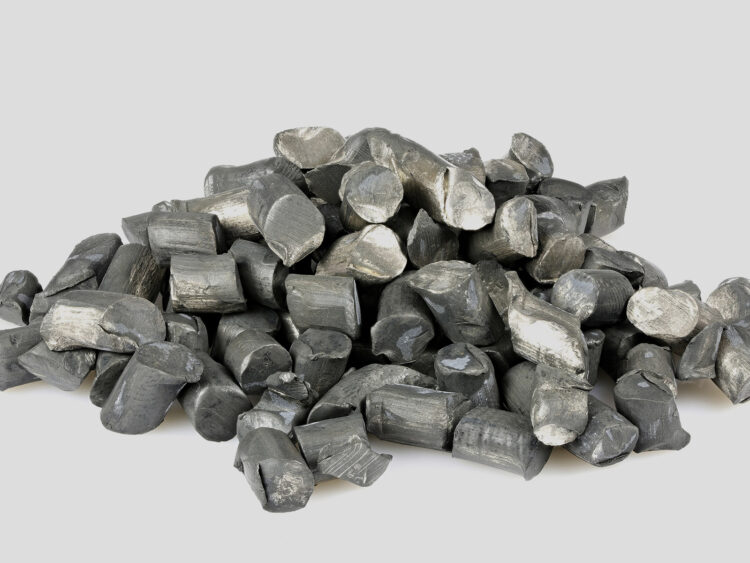
Lithium is a key ingredient in the production of batteries for electric vehicles and other renewable energy storage systems. Some of the world’s top Lithium producers are in Latin America. Recently Chile, one of the world’s largest producers of lithium, passed a law that allows the state to take over lithium resources and production. This move is intended to promote Chile’s sustainable development and reduce its dependence on exporting raw materials. It will increase Chile’s control over its domestic natural resources, generate greater revenues for the state, and ensure that lithium production is sustainable and environmentally responsible.

Although the Chilean government has announced that they will respect existing mining concessions and contracts, this nationalization represents a significant change in management of Chilean natural resources. The global mining industry, however, is spooked and in the short term this move is likely to deter foreign investment in Chile’s mining dependent economy. It is to be noted that Chile is also a major producer of copper and other base and precious metals and historically it has been applauded for its friendly jurisdiction in exploration and mining industries.

There are additional international ramifications of the move. Resource nationalisation has of late become a policy trend in several jurisdictions. There have been concerns in recent years about the potential for cartelisation of lithium production in Latin America. Lithium is a key component in the production of batteries for electric vehicles, making it a critical resource for the global transition to clean energy. Countries in Latin America that hold the large known reserves of lithium are Chile, Argentina, Bolivia and Mexico. These countries have been working together to create a regional bloc to regulate and control lithium production in the region, which has raised concerns about the potential for OPEC like cartelization of Lithium. The concern is that the regional bloc could lead to an oligopoly where a small group of companies control the supply of lithium and manipulate prices. This could result in higher prices for lithium, which would impact the affordability and accessibility of electric vehicles and other clean energy technologies.

In recent times Chinese companies have been expanding their presence in the Latin American lithium mining sector in recent years, with the aim of securing access to the critical mineral for China’s growing electric vehicle industry. Chinese companies, backed by the state power and influence have expanded the scope of investment through partnerships with local companies. China is also investing in vertical integration of Lithium supply chains from exploration to processing and refining in Latin America. With their domination of global supplies from domestic sources and expanding significance in major global supply hubs, Chinese companies dominate the global lithium market. This could impact the availability and affordability of lithium for other countries, including India and the United States.

The Chinese presence in the Latin American lithium mining sector has several implications from an Indian strategic viewpoint. India is a major consumer of lithium and has exponentially growing demand for the mineral as the country moves towards a cleaner energy future. Now and in the near future, no new domestic lithium sources appear to be on horizon in India. The recently announced lithium “discovery” in J&K still requires several years of work before its viability can be proven and the demand appears to be significantly outstripping the domestic supply.

One implication is that the Chinese presence in the Latin American lithium mining sector could increase competition for lithium resources, which could impact the availability and affordability of lithium for Indian companies. This could also impact India’s ability to secure a reliable supply of lithium for its domestic market.

Another implication is that the Chinese presence in the Latin American lithium mining sector could increase Chinese influence in the region. This could have geopolitical implications, as China and India are both competing for influence in the region. Increased Chinese influence could also impact India’s ability to secure diplomatic support in the region.

To mitigate these implications, India could work towards increasing its engagement with Latin American countries to secure reliable sources of lithium. The Indian government could encourage private sector exploration companies to stake lithium prospects overseas and also consider investing in lithium mining projects in the region to increase its access to lithium resources.

Several unproven lithium prospects exist at many places in the world. These prospects have remained known but undeveloped due to a variety of reasons. The common reasons are:

1. Exploration challenges: Proving the economic viability of a deposit requires long and painstaking collection of geological data, conducting geophysical surveys, drilling and testing, all of which are expensive and time-consuming. These works are typically done by small exploration companies that then sell the “proven” area to a mining company.

2. Infrastructure: Mineral deposits are mostly found in interior locations. To mine these, significant investment in road, power, communication, water supply etc are required. In countries where the infrastructure is better developed even smaller projects become viable. If the infrastructure development cost is loaded on the project viability the resource must be very large. Typically, large resources are much rarer than smaller resources.

3. Environmental: Lithium extraction and purification can have a significant environmental footprint and hence environmental permitting is often a challenge.

4. Regulatory: Permitting processes vary from country to country and sometimes from state to state. At several places in the global south the regulatory path from exploration to development can be ambiguous and subjective.

5. Social: With the large ecological footprint, lithium development projects can face opposition from local communities and environmental groups. This can delay or prevent development.

6. Market: Lithium market is largely volatile. Majority of lithium supplies come from China where significant government controls over prices creates uncertainties. The Chinese Communist Party has in the past demonstrated its ability and willingness to weaponize its dominant control of mineral resources. Lithium exploration and development is a long and expensive enterprise and the return on investment can take several years to come. Investors are often wary of such long gestation projects where the ultimate future commodity prices are dependent not on the free market but on an opaque governmental or cartel process.

In order to encourage the investment in this industry in face of the aforesaid challenges the US government has taken initiative providing research grants for R&D in lithium extraction technologies and battery technologies to improve the efficiency and reduce the cost of producing lithium-ion batteries; offering tax incentives for companies investing if advanced battery technologies; exploring in sources of lithium from domestic or regional sources, and partnering with industry to de-risk the lithium development process. It would be useful for the Indian government too to take a leaf out of the US playbook and partner with Indian companies and Indian Diaspora in the Indian Ocean Region to secure the supplies to gain strategic resource autonomy.


Source:

https://www.financialexpress.com/business/defence-lithium-cartelisation-strategic-impact-and-indian-response-3060065/


Total
0
Shares
Share 0
Tweet 0
Pin it 0
Share 0
Share 0

Leave a Reply Cancel reply

Your email address will not be published. Required fields are marked *

Recent Posts

BREAKING GLASS CEILING – Col Vijaykant Chenji (Retd)

BREAKING GLASS CEILING – Col Vijaykant Chenji (Retd)

April 21, 2026
Lessons For India: Learning From USA-Iran War – by Brigadier Hemant Mahajan (Retd)

Lessons For India: Learning From USA-Iran War – by Brigadier Hemant Mahajan (Retd)

April 21, 2026
WAR WITHOUT FRONTIERS : How Modern Conflict is Redefining Victory  – by Col Vijay Chenji (Retd)

WAR WITHOUT FRONTIERS : How Modern Conflict is Redefining Victory – by Col Vijay Chenji (Retd)

April 5, 2026
Naval Confrontation in the Strait of Hormuz: American Aircraft Carriers vs Iran’s ‘Choke-Point’ Strategy – by Brigadier Hemant Mahajan

Naval Confrontation in the Strait of Hormuz: American Aircraft Carriers vs Iran’s ‘Choke-Point’ Strategy – by Brigadier Hemant Mahajan

April 4, 2026
From NATO to a New Security Structure in Europe – By C.M.A.Nayar

From NATO to a New Security Structure in Europe – By C.M.A.Nayar

March 31, 2026
Trump’s endgame: Could Israel bear the brunt of Iran conflict? – by Lt Gen C.A. Krishnan (retd)

Trump’s endgame: Could Israel bear the brunt of Iran conflict? – by Lt Gen C.A. Krishnan (retd)

March 24, 2026

<strong>About IIRF</strong>

Indus International Research Foundation is a New Delhi based organisation with its overseas centre at USA . It is part of a global network of scholars, professionals and veterans based in India and abroad. The Foundation focuses primarily on international relations, Indian heritage, political economy and security studies. Led by experts with decades of international and domestic policy experience, IIRF India engages with governments, policymakers, academics, students, industries, practitioners, and civil society to provide insightful and fresh analysis of global trends and India’s challenging role as an emerging world leader. Foundation also runs special programs for veterans.

Office Addresses

Delhi NCR
F-511, Jalvayu Towers, Sector-47, Noida, Gautam Budh Nagar, UP, India – 201301
Email – contact@indusresearch.in
Mobile :- +91 8588021407

USA
India International Research Foundation, 2105 Long Park Avenue Prosper 75078, Dallas, Texas, USA Email – infousa@indusresearch.in

Bangalore
Indus International Research Foundation, Parkside Brigade Orchards, Devanhalli, Bangalore, Karnataka -562110

Explore IIRF

  • Links
  • International Relations & Security
  • History
  • Military Doctrine & Strategy
  • Science and Technology
  • Economics and Commerce
  • Education
  • IIRF Creativity Zone
  • Membership
  • Support IIRF

© 2022 Indus Research

No Result
View All Result
  • Home
  • About
    • Who We Are
    • Patrons
    • Governing Board
    • Advisors
    • Directors
    • Editorial Board
    • Support IIRF
  • Themes
    • International Relations & Security
      • Land Security
      • Maritime Security
      • Aerospace Security
      • Nuclear
      • Geopolitics
    • History
    • Military Doctrine & Strategy
      • Doctrines
      • Joint and Integrated Defence
      • Civil Military Relations
    • Science and Technology
      • Defence Technology
      • Industries and Society
      • Climate Change
      • Natural Resources
    • Economics and Commerce
      • Rare Earth
      • Maritime Economy
      • International Trade
    • Education
  • Focus Geographies
    • South Asian Connectivity & Cooperation
      • Afghanistan
      • Pakistan
      • Nepal
      • Bhutan
      • Bangladesh
      • Myanmar
      • Sri Lanka
      • Maldives
      • BIMSTEC
      • SAARC
      • SAGQ
      • BBIN
      • BRI
      • INSTC
      • IORA
      • MGC
      • IMT
    • Indo-Pacific
      • Indo-Pacific Economic Forum
      • QUAD
      • Oceania
      • IORA
      • Middle East
    • Indo-US Relations
    • Central Asia and Russia
  • Publications
    • Commentary
    • Issue Briefs
    • Research Paper
    • Monograph
    • Journal Articles
    • Books
    • Book reviews
    • Contributors
    • Submission Rules
    • IIRF Strategic Year Book – 2022-23
    • IIRF Strategic Yearbook – 2024
  • Membership
    • Membership Form
  • Indo-US Forum
  • Indian Knowledge System
    • Arts & Culture
    • Yoga & Health
    • Sanskrit Vedic Science Spirituality
  • IIRF Creativity Zone
  • Contact
  • Events & Media
    • IIRF EVENTS
    • US-India Business Connect 2025
    • WTC Utah’s India Trade Mission 2024 Gallery
    • Videos
  • language
    • Hindi

© 2022 Indus Research