The war unfolding in West Asia is unlike anything the world has witnessed in recent decades. it is not merely another regional conflict. Its intensity, scale of destruction, and relentless tempo evoke comparisons with the Second World War. Cities are being pulverized, infrastructure decimated, supply chains disrupted, and communication networks crippled. Precision strikes and saturation bombardments have turned vast urban settlements into rubble. Underground assets, once considered safe and secure, are now vulnerable to deep-penetration arsenal.
Yet, in a striking and almost paradoxical contrast, battlefield casualties among uniformed soldiers remain relatively low. While this a comforting shift, what is disconcerting is today the unarmed civilians, mostly women and children, are the victims.
This is not the trench warfare, mass infantry assaults, or tank battles that defined the great conflicts of the last century. The defining image today is not of Infantrymen shouting battle cries charging against heavy fortifications but of drones hovering stealthily over cities, missiles streaking across skies, and entire building towers collapsing like a pack of cards. Civilians—not combatants—have become the primary victims of modern warfare.
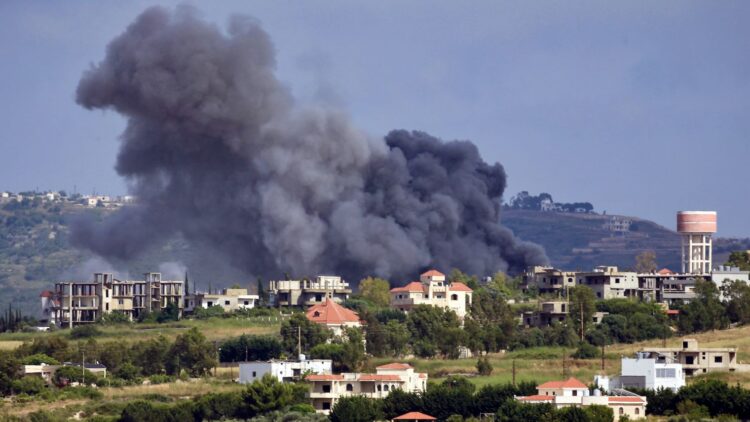
Across the region, the human toll tells a grim story. Civilian deaths caused by missile strikes, drone attacks, and artillery barrages far outnumber those of soldiers engaged in direct combat. None of the belligerents have contiguous land borders. Even countries not formally at war have suffered devastating losses and hardships too . Lebanon, a small nation on the periphery of the conflict, has reportedly lost thousands of civilians. Similar patterns are visible across other affected regions, including Iran and states aligned with major powers. Allies of the USA are paying a very high price for support to their strategic partner that is purely trade and commerce.
Meanwhile, military casualties among major actors remain, fortunately, low, largely because of the non-contact nature of the war. Advanced defensive systems, real-time intelligence, accurate weapons and remote warfare capabilities have dramatically reduced the exposure of soldiers to direct combat. Warfighters now operate from control rooms, command centers, and beyond borders—far removed from the traditional battlefield. We saw thi so during Op SINDOOR too.
And yet, amid this vast destruction and loss of civilian life, global attention has been captured by a different phenomenon: the fate of captured pilots. Fighter pilots are lone warriors and often undertake high-risk missions deep inside hostile territories.
The downing and capture of elite fighter pilots has emerged as a focal point of international concern. These individuals, who penetrate deep into hostile territory on high-risk missions, embody both technological superiority and national prestige. When they are shot down and captured, the narrative of war shifts abruptly—from strategy and territory to human drama and political leverage.
The risks they face are severe: torture, public humiliation, or being used as bargaining chips in high-stakes negotiations. Their capture resonates deeply with domestic audiences and leadership alike. Nations mobilize diplomatic, intelligence, and even military resources to secure their return. In some cases, the rescue or recovery of a single pilot assumes disproportionate importance, overshadowing broader strategic objectives.
This marks a profound departure from the past.
During the Second World War, thousands of pilots were captured by both Allied and Axis powers. While their plight was significant, it did not dominate the narrative of the war. The focus remained firmly on territorial gains, capturing industries and the destruction of enemy forces.
Even in more recent history, the scale of prisoner capture did not necessarily translate into strategic leverage. In the 1971 war, India took over 93,000 prisoners of war, including senior commanders. It was one of the largest surrenders since World War II. Yet, the full strategic advantage of this unprecedented leverage was arguably not realized in shaping long-term geopolitical outcomes.
Contrast this with today’s environment, where the capture of even a handful of high-value individuals—pilots, intelligence officers, or key operatives—can trigger global reactions and influence negotiations. The symbolic value of such individuals has increased exponentially.
This raises a fundamental question: has warfare itself undergone a transformation?
The answer appears to be a decisive yes.
Modern warfare is increasingly defined by what can be termed “non-contact conflict.” The traditional movement of large armies, tanks, and artillery formations has given way to precision strikes, cyber operations, economic warfare, and strategic disruption. Nations now target choke points rather than frontlines—energy corridors, financial systems, digital infrastructure, and supply chains.
Victory is no longer measured solely by territory captured or enemy forces destroyed. Instead, new parameters that are dominating current global scenarios are technology, economy and psychological impact.
A new addition to the list of ‘ must do’ is the elimination and liquidation of top figures like political leaders, military generals and religious heads who command huge influence over the people of the country. Their loss impact the enemy’s morale adversary.
In this evolving scenario, high-value assets—advanced aircraft, hi-tech delivery systems, strategic installations, and elite personnel—have become central to the calculus of war. The loss of a single sophisticated platform or the capture of a pilot can carry strategic, psychological, and political consequences far beyond its immediate tactical significance.
Notwithstanding these changes, the vulnerability of civilians has increased dramatically. Greyzone warfare, remote targeting, and the use of long-range precision weapons mean that the battlefield is omnipresent and yet invisible. The gap between combat zone and civilian space has all but evoporated.
This is the defining paradox of modern war. It is both highly precise and ruthlessly devastating.
As nations continue to reconcile to this new reality, one thing is clear: the metrics of victory and defeat are being rewritten. Wars are no longer decided solely by the clash of armies, but by their economic resilience, people’s resolve and technological advancements.
The question that remains is not just who will win the current conflict, but what kind of warfare will define the future—and at what cost to humanity