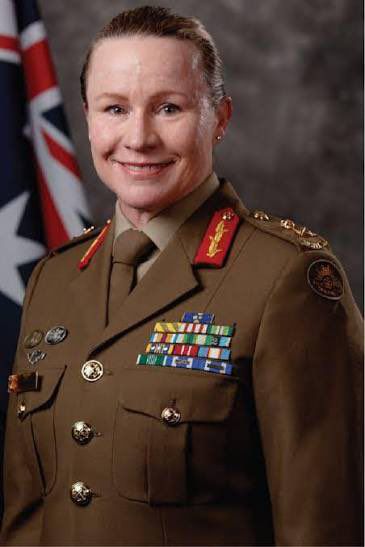
The appointment of Lt Gen Susan Coyle as Chief of the Australian Army will be hailed by many as a milestone in the march toward gender equality. Yet, beneath the public approval, a quieter question lingers – was this a purely merit-based choice, or was it a part of evolution process of women representation that played a role? Would a more “deserving” male officer have been overlooked—or was she simply the best candidate available?
Warfare has, for centuries, been a predominantly male domain. The leader of an army is expected be a tough, battle hardened soldier, with decades of military experience. Unquestionably he embodies operational excellence and hardships of combat life. That Lt Gen Coyle does not come from a combat arm adds a dose of scepticism for many , making her elevation, in their eyes, unconventional.
However, context matters. The Australian Army, though relatively small—around 25,000–30,000 personnel— a little over an Infantry Division is highly professional, well-equipped, and deeply integrated with large strategic forces such as the United States. Its record in battles have been praiseworthy. Australia being a continent by itself is geographically isolated, enjoys strategic advantage and not vulnerable to attacks from unfriendly countries.
That perhaps justifies the small size of its army. Its strategic role, scale, and operational environment make this appointment less contentious than it might be in larger, more tradition-bound armies. In a bigger force, such a decision could well have triggered sharper debate, dissatisfaction and even resentment.
In many non-western societies, the barriers would be steeper—ranging from entrenched notions of machoism, concerns about field exposure and social acceptance. Yet history does offer precedents. In the Indian tradition, Shakti or power is represented by Goddess Durga who led a large army against evil forces. In more recent times women warriors like Rani Lakshmibai of Jhansi, Razia Sultana,Queen Abbakka, Rani chennamma and many others have demonstrated that women have led in war, even if such instances were exceptions rather than the norm.
Exponents of this thought rightly argue that if women can head nations as Prime Ministers or Presidents, why not armies? Critics respond that commanding an army is fundamentally different from governing a state—it demands a distinct blend of expertise, operational credibility, battlefield experience, and institutional acceptance.
But modern warfare is fast evolving. Technology, precision systems, cyber capabilities, and remote operations increasingly define conflict. The non-contact nature of modern warfare has considerably reduced physical combat. This counters the long-held argument that the battlefield is inherently unsuitable for women.
Ultimately, the real test is not gender—but competence. If merit remains the standard, then appointments like this will, over time, cease to be seen as exceptional—and simply be accepted as normal.
So, is the world moving towards armies led by generals cutting across gender bias? Not really but there is a tacit acceptance of this reality.
In the Indian context, if it happens, the first woman Army chief will have to be an Ex NDA from the combat army. So that would be towards the latter part of this century. So for the present our generals in waiting need not lose any sleep.