Indus Research
No Result
View All Result
Tuesday, June 23, 2026
login
  • Home
  • About
    • Who We Are
    • Patrons
    • Governing Board
    • Advisors
    • Directors
    • Editorial Board
    • Support IIRF
  • Themes
    • International Relations & Security
      • Land Security
      • Maritime Security
      • Aerospace Security
      • Nuclear
      • Geopolitics
    • History
    • Military Doctrine & Strategy
      • Doctrines
      • Joint and Integrated Defence
      • Civil Military Relations
    • Science and Technology
      • Defence Technology
      • Industries and Society
      • Climate Change
      • Natural Resources
    • Economics and Commerce
      • Rare Earth
      • Maritime Economy
      • International Trade
    • Education
  • Focus Geographies
    • South Asian Connectivity & Cooperation
      • Afghanistan
      • Pakistan
      • Nepal
      • Bhutan
      • Bangladesh
      • Myanmar
      • Sri Lanka
      • Maldives
      • BIMSTEC
      • SAARC
      • SAGQ
      • BBIN
      • BRI
      • INSTC
      • IORA
      • MGC
      • IMT
    • Indo-Pacific
      • Indo-Pacific Economic Forum
      • QUAD
      • Oceania
      • IORA
      • Middle East
    • Indo-US Relations
    • Central Asia and Russia
  • Publications
    • Commentary
    • Issue Briefs
    • Research Paper
    • Monograph
    • Journal Articles
    • Books
    • Book reviews
    • Contributors
    • Submission Rules
    • IIRF Strategic Year Book – 2022-23
    • IIRF Strategic Yearbook – 2024
  • Membership
    • Membership Form
  • Indo-US Forum
  • Indian Knowledge System
    • Arts & Culture
    • Yoga & Health
    • Sanskrit Vedic Science Spirituality
  • IIRF Creativity Zone
  • Contact
  • Events & Media
    • IIRF EVENTS
    • US-India Business Connect 2025
    • WTC Utah’s India Trade Mission 2024 Gallery
    • Videos
  • language
    • Hindi
  • Home
  • About
    • Who We Are
    • Patrons
    • Governing Board
    • Advisors
    • Directors
    • Editorial Board
    • Support IIRF
  • Themes
    • International Relations & Security
      • Land Security
      • Maritime Security
      • Aerospace Security
      • Nuclear
      • Geopolitics
    • History
    • Military Doctrine & Strategy
      • Doctrines
      • Joint and Integrated Defence
      • Civil Military Relations
    • Science and Technology
      • Defence Technology
      • Industries and Society
      • Climate Change
      • Natural Resources
    • Economics and Commerce
      • Rare Earth
      • Maritime Economy
      • International Trade
    • Education
  • Focus Geographies
    • South Asian Connectivity & Cooperation
      • Afghanistan
      • Pakistan
      • Nepal
      • Bhutan
      • Bangladesh
      • Myanmar
      • Sri Lanka
      • Maldives
      • BIMSTEC
      • SAARC
      • SAGQ
      • BBIN
      • BRI
      • INSTC
      • IORA
      • MGC
      • IMT
    • Indo-Pacific
      • Indo-Pacific Economic Forum
      • QUAD
      • Oceania
      • IORA
      • Middle East
    • Indo-US Relations
    • Central Asia and Russia
  • Publications
    • Commentary
    • Issue Briefs
    • Research Paper
    • Monograph
    • Journal Articles
    • Books
    • Book reviews
    • Contributors
    • Submission Rules
    • IIRF Strategic Year Book – 2022-23
    • IIRF Strategic Yearbook – 2024
  • Membership
    • Membership Form
  • Indo-US Forum
  • Indian Knowledge System
    • Arts & Culture
    • Yoga & Health
    • Sanskrit Vedic Science Spirituality
  • IIRF Creativity Zone
  • Contact
  • Events & Media
    • IIRF EVENTS
    • US-India Business Connect 2025
    • WTC Utah’s India Trade Mission 2024 Gallery
    • Videos
  • language
    • Hindi
No Result
View All Result
Indus Research
No Result
View All Result
Home Commentary

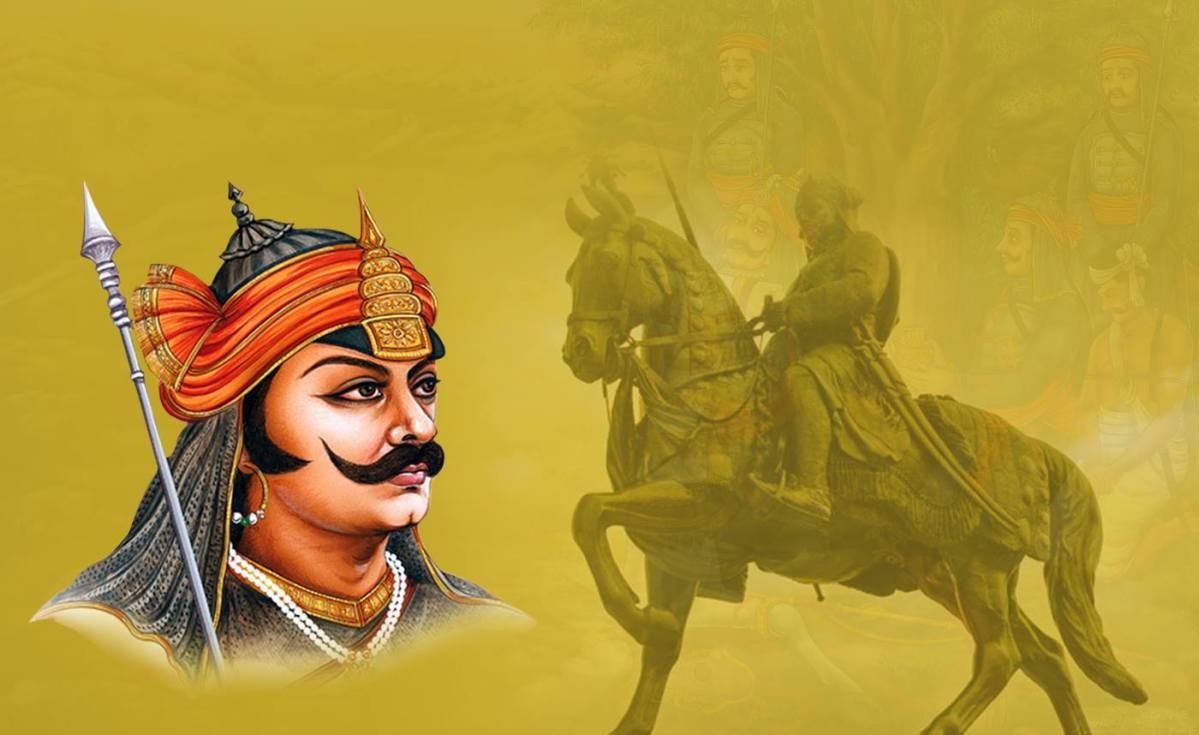
“Commemorating Maharana Pratap: 450 Years Since Haldi Ghati and 486 Years of a Hero — An Analysis of His Guerrilla Warfare Against Akbar” By Brig Hemant Mahajan (Retd)

by Brig Hemant Mahajan
June 23, 2026
in Commentary, HISTORY, Military Doctrine & Strategy
0
“Commemorating Maharana Pratap: 450 Years Since Haldi Ghati and 486 Years of a Hero — An Analysis of His Guerrilla Warfare Against Akbar”  By Brig Hemant Mahajan (Retd)
Total
0
Shares
Share 0
Tweet 0
Share 0
Share 0
Share 0


Maharana Pratap’s Guerrilla Warfare Against Akbar

Maharana Pratap was a brilliant military strategist who employed a wide range of tactics to challenge and resist his enemies, most notably the Mughals.

“History has often been written from the perspective of those close to power. As a result, the contributions of many national heroes have not received the recognition they truly deserved. The Battle of Haldi Ghati, in particular, requires a careful re‑evaluation of the facts. Today, Maharana Pratap’s birth anniversary is celebrated across India with reverence and honor—a powerful reminder that the nation never forgets its true heroes.”

On 18 Jun 26 On the occasion of the 450th anniversary of the Battle of Haldi Ghati and the 486th birth anniversary of Maharana Pratap, it is important to revisit how he used guerrilla warfare against Akbar and inflicted a significant setback on the Mughal forces.

Pratap’s tactics—hit‑and‑run raids, disruption of supply lines, mastery of terrain, and inspiring leadership—enabled him to withstand the might of one of the most powerful empires of his time. His innovative strategies at Haldi Ghati, though ultimately ending in retreat, inflicted heavy casualties on the Mughals and forced them to withdraw.

Maharana Pratap’s legacy as a fearless warrior and symbol of resistance continues to inspire generations, reminding us that courage, resilience, and tactical brilliance can overcome even the greatest odds.

How Maharana Pratap Used Guerrilla Warfare Against Akbar

Maharana Pratap’s military strategies against the Mughal Empire were characterized by innovation, extreme flexibility, and a profound understanding of both the local terrain and his enemy’s vulnerabilities. Below are the key strategies and tactics he deployed during his campaigns:

  1. Masterful Guerrilla Warfare & Ambushes
  • Asymmetric Tactics: Recognizing the numerical superiority of the heavily armoured Mughal army, Maharana Pratap avoided open, full-scale battles. Instead, he relied on hit-and-run tactics, surprise raids, and ambushes to steadily weaken Mughal forces while preserving his own.
  • Exploiting Darkness: His forces frequently launched coordinated night attacks. Moving silently in dark clothing under the cover of night, his troops caught the Mughals off guard, neutralizing their conventional battlefield advantages.
  1. Strategic Use of Rugged Terrain
  • Geographical Advantage: Armed with an intimate knowledge of Mewar’s topography, Maharana Pratap utilized natural barriers—such as mountains, forests, and rivers—to protect his flanks and rear.
  • Choke Points and Traps: He effectively lured Mughal forces into narrow passes, gorges, and defiles. Once the enemy was funnelled into these confined spaces, Maharana Pratap’s forces would launch devastating multi-directional attacks from elevated positions.
  1. Defensive Fortifications
  • Strongholds of Defiance: When facing overwhelming odds, Maharana Pratap adopted a deeply fortified defensive stance. He constructed a network of strategically placed forts, trenches, and watchtowers across Mewar. These structures served as secure bases to launch counterattacks and stood as symbols of resistance that inspired the local population.
  1. High Mobility, Speed, and Cavalry
  • Fluid Formations: The Mewari army was highly mobile and capable of traversing treacherous terrain at remarkable speeds. Maharana Pratap utilized fast-moving cavalry units to outflank, encircle, and disrupt Mughal formations, cutting off their escape routes and striking their rear to induce panic.
  1. Tactical Retreats as Decoys
  • Feigned Retreats: Retreating was not a sign of defeat but a deliberate tactical tool. If the odds were unfavorable, Maharana Pratap would withdraw to preserve his men. Frequently, these retreats were used as bait to lure overconfident Mughal forces into pre-arranged traps and ambushes.
  1. Specialized Combat Units & Diverse Weaponry
  • Lethal Archery: Mewari archers were deployed to rain arrows from safe distances, causing chaos in tranks. They specifically targeted Mughal commanders to disrupt the enemy’s chain of command.
  • Combat Diversity: Troops were rigorously trained in a wide array of weaponry, including swords, spears, bows, and early firearms.
  • War Elephants: Elephants were utilized both for heavy transport across challenging terrain and as psychological weapons to charge and shatter Mughal lines.
  1. Psychological Warfare & Camouflage
  • Environmental Blending: Troops utilized local attire and natural materials like leaves and branches as camouflage, allowing them to remain undetected until the moment of ambush.
  • Morale and Dread: Maharana Pratap used war drums, horns, and his own formidable reputation to strike fear into the Mughal while boosting the morale of his own men.
  1. Battlefield Deterrents (Spikes and Fire)
  • Anti-Elephant Tactics: To counter the Mughal war elephants, Maharana Pratap’s troops deployed fire tactics, throwing flaming projectiles to cause the beasts to panic and trample their own lines.
  • Field Engineering: The Mewari army dug hidden pits lined with spikes and thorns to impede the advance of Mughal cavalry and infantry.
  1. Intelligence and Decentralized Command
  • Espionage Networks: Maharana Pratap relied heavily on a sophisticated network of local spies and informants who provided real-time intelligence on Mughal movements, strengths, and vulnerabilities.
  • Autonomous Leadership: The army operated under a decentralized command structure. Local commanders were granted high autonomy, enabling them to make rapid, independent decisions based on immediate battlefield conditions without waiting for centralized orders.
  1. Training, Camaraderie, and Discipline
  • Leading by Example: Maharana Pratap fostered fierce loyalty by sharing the hardships of his soldiers and fighting alongside them on the front lines. Bravery was consistently rewarded with land and titles.
  • Strict Discipline: He enforced rigorous training and strict discipline, ensuring his army remained versatile, adaptable, and highly resilient.
  1. Cultural and Psychological Mobilization
  • Poetry and Song: As a patron of the arts, Maharana Pratap commissioned bards and poets to compose and sing ballads of Mewari heroism. Recited throughout the region, these songs fostered a deep sense of unity, patriotism, and defiance against foreign rule.
  • Religious Alignment: A devout Hindu, Maharana Pratap invoked divine blessings through rituals before battles, utilizing cultural symbols to unite his troops under a shared, sacred purpose.
  1. Diplomacy and Siege Tactics
  • Strategic Alliances: When beneficial, Maharana Pratap used diplomacy to form critical alliances with other Rajput leaders to strengthen his geopolitical position.
  • Counter-Blockades: He occasionally employed siege warfare and economic blockades, cutting off crucial supply lines to isolate and starve out Mughal garrisons who relied heavily on external logistics.

Conclusion

Maharana Pratap’s military legacy is defined by resourcefulness. By maximizing his asymmetric advantages, maintaining an iron grip on local intelligence, and refusing to fight on the enemy’s terms, he mounted one of the most resilient resistances in Indian history.

Maharana Pratap did not earn the title “Hindua Suraj” (Sun of the Hindus) without reason. He dedicated his entire life to the defense of religion, culture, self‑respect, and national interest. His life was not about the pursuit of power, but about public welfare, ideal governance, and the protection of national identity. He created a model of leadership for future generations—one that continues to inspire the nation even today.


The history of India is not merely a story of subjugation; it is a saga of relentless struggle, resistance, and self‑respect against foreign invaders. The Battle of Haldi Ghati was not just a clash between two armies—it was a great national struggle


The Battle of Haldi Ghati is regarded as a shining example of Maharana Pratap’s military genius. His valor inspired Rajputs and Indian warriors alike. Maharana Pratap is remembered as one of the greatest warriors in Indian history, and his legacy remains a source of inspiration even today.


His strategies reflected innovation, flexibility, and a profound understanding of terrain. He utilized his resources and the strength of his army to the fullest.

Thus, Maharana Pratap stands as a symbol of freedom and resistance in Indian history.

Total
0
Shares
Share 0
Tweet 0
Pin it 0
Share 0
Share 0

Leave a Reply Cancel reply

Your email address will not be published. Required fields are marked *

Recent Posts

“Commemorating Maharana Pratap: 450 Years Since Haldi Ghati and 486 Years of a Hero — An Analysis of His Guerrilla Warfare Against Akbar”  By Brig Hemant Mahajan (Retd)

“Commemorating Maharana Pratap: 450 Years Since Haldi Ghati and 486 Years of a Hero — An Analysis of His Guerrilla Warfare Against Akbar” By Brig Hemant Mahajan (Retd)

June 23, 2026
Forgotten Tragedy: The Disappearance  of Hindus and Other Minorities in Pakistan, Bangladesh, and Afghanistan  – by  Brigadier Hemant Mahajan (Retd)

Forgotten Tragedy: The Disappearance  of Hindus and Other Minorities in Pakistan, Bangladesh, and Afghanistan – by Brigadier Hemant Mahajan (Retd)

June 8, 2026
Illegal Bangladeshi Infiltration: An Extremely Serious Challenge to National Security – by Brigadier Hemant Mahajan (Retd)

Illegal Bangladeshi Infiltration: An Extremely Serious Challenge to National Security – by Brigadier Hemant Mahajan (Retd)

May 30, 2026
Book Review, Great Maratha General: Mahadaji Scindia – By Brig Hemant Mahajan (Retd)

Book Review, Great Maratha General: Mahadaji Scindia – By Brig Hemant Mahajan (Retd)

May 12, 2026
BREAKING GLASS CEILING – Col Vijaykant Chenji (Retd)

BREAKING GLASS CEILING – Col Vijaykant Chenji (Retd)

April 21, 2026
Lessons For India: Learning From USA-Iran War – by Brigadier Hemant Mahajan (Retd)

Lessons For India: Learning From USA-Iran War – by Brigadier Hemant Mahajan (Retd)

April 21, 2026

<strong>About IIRF</strong>

Indus International Research Foundation is a New Delhi based organisation with its overseas centre at USA . It is part of a global network of scholars, professionals and veterans based in India and abroad. The Foundation focuses primarily on international relations, Indian heritage, political economy and security studies. Led by experts with decades of international and domestic policy experience, IIRF India engages with governments, policymakers, academics, students, industries, practitioners, and civil society to provide insightful and fresh analysis of global trends and India’s challenging role as an emerging world leader. Foundation also runs special programs for veterans.

Office Addresses

Delhi NCR
F-511, Jalvayu Towers, Sector-47, Noida, Gautam Budh Nagar, UP, India – 201301
Email – contact@indusresearch.in
Mobile :- +91 8588021407

USA
India International Research Foundation, 2105 Long Park Avenue Prosper 75078, Dallas, Texas, USA Email – infousa@indusresearch.in

Bangalore
Indus International Research Foundation, Parkside Brigade Orchards, Devanhalli, Bangalore, Karnataka -562110

Explore IIRF

  • Links
  • International Relations & Security
  • History
  • Military Doctrine & Strategy
  • Science and Technology
  • Economics and Commerce
  • Education
  • IIRF Creativity Zone
  • Membership
  • Support IIRF

© 2022 Indus Research

No Result
View All Result
  • Home
  • About
    • Who We Are
    • Patrons
    • Governing Board
    • Advisors
    • Directors
    • Editorial Board
    • Support IIRF
  • Themes
    • International Relations & Security
      • Land Security
      • Maritime Security
      • Aerospace Security
      • Nuclear
      • Geopolitics
    • History
    • Military Doctrine & Strategy
      • Doctrines
      • Joint and Integrated Defence
      • Civil Military Relations
    • Science and Technology
      • Defence Technology
      • Industries and Society
      • Climate Change
      • Natural Resources
    • Economics and Commerce
      • Rare Earth
      • Maritime Economy
      • International Trade
    • Education
  • Focus Geographies
    • South Asian Connectivity & Cooperation
      • Afghanistan
      • Pakistan
      • Nepal
      • Bhutan
      • Bangladesh
      • Myanmar
      • Sri Lanka
      • Maldives
      • BIMSTEC
      • SAARC
      • SAGQ
      • BBIN
      • BRI
      • INSTC
      • IORA
      • MGC
      • IMT
    • Indo-Pacific
      • Indo-Pacific Economic Forum
      • QUAD
      • Oceania
      • IORA
      • Middle East
    • Indo-US Relations
    • Central Asia and Russia
  • Publications
    • Commentary
    • Issue Briefs
    • Research Paper
    • Monograph
    • Journal Articles
    • Books
    • Book reviews
    • Contributors
    • Submission Rules
    • IIRF Strategic Year Book – 2022-23
    • IIRF Strategic Yearbook – 2024
  • Membership
    • Membership Form
  • Indo-US Forum
  • Indian Knowledge System
    • Arts & Culture
    • Yoga & Health
    • Sanskrit Vedic Science Spirituality
  • IIRF Creativity Zone
  • Contact
  • Events & Media
    • IIRF EVENTS
    • US-India Business Connect 2025
    • WTC Utah’s India Trade Mission 2024 Gallery
    • Videos
  • language
    • Hindi

© 2022 Indus Research