The US-Iran War of 2026 ranks among the decade’s most consequential events. It has devastated Iranian and Gulf infrastructure, shaken the world order, disrupted NATO, European, and Middle Eastern alliances, and affected lives across America, Europe, the Middle East, Asia, and beyond.
Closure of the Strait of Hormuz—through which roughly 25 percent of the world’s oil, more than 50 percent of oil-based chemicals, 45 percent of fertilizers, and 80 percent of Gulf trade destined for Asia pass—has severely disrupted Asian energy supplies and commerce, with heavy impact on ASEAN economies, China, and India.
Ordinary people ask: What is this war about? Who started it? Who bears responsibility? Answers are neither simple nor free of ideology. This article examines the ideological core from a neutral standpoint while addressing key geopolitical realities.
The War in Brief
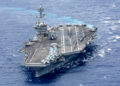
The conflict began on 28 February 2026 when the United States and Israel launched Operation Epic Fury—high-intensity strikes on Iranian nuclear facilities and leadership. It rapidly expanded into a broader Persian Gulf war, with the Strait of Hormuz as the decisive theater. By July 2026 it had entered its sixth month: a volatile mix of fighting, fragile ceasefires, and renewed clashes. Thousands have died, global energy markets have been upended, and Middle Eastern geopolitics reshaped—yet neither decisive regime change in Tehran nor comprehensive peace has resulted.
Historical Background
West Asia has been a crucible of conflict since World War II. Strategic location, oil, big power rivalry, and deep local religio-ethnic divisions among Shias, Sunnis, Christians, Jews, Druze, Alawites, Kurds, Zoroastrians, and Yazidis have all conributed their bit and added their own flavours and shades to this canvas as we see it today . After colonialism ended, some communities secured sovereignty; others—including Kurds, Yazidis, Druze, and Palestinians—did not. Key markers include the 1956 Suez Crisis (end of British-French dominance), the 1967 Six-Day War, the 1973 oil embargo that cemented the petrodollar system, and the 1979 Iranian Revolution that reignited the Shia–Sunni power struggle now central to the current war.
Iran Is Not an Arab Country
Iran stands outside the Arab Muslim world. Like India that is inheritor of an ancient vedic civilisation who created huge ancient Magadha, Gupta, Maurya, Pallava, Chalukyas, Chola empires in India , Iran was also originally the land of Zoroastrian fire-worshippers who built the Achaemenid, Parthian, and Sasanian empires—a civilizational history spanning three millennia. Arab Muslim armies conquered the Sasanian Empire in 651 CE. Forced conversions, persecution, destruction of temples and scriptures, and execution of priests followed. Iranians retained their language and many intellectual traditions, but Zoroastrianism declined sharply (today roughly 121,000 adherents remain, many in India’s Parsi community). Iran is now a Shia-majority nation of about 93 million. Shia Islam is the official religion, yet undercurrents of resentment toward orthodoxy persist.
Recent History
In the early 20th century the weak Qajar dynasty gave way to the Pahlavis. A constitutional movement elevated Mohammad Mosaddegh as elected prime minister in 1951. He nationalized oil, then controlled by the British Anglo-Persian Oil Company, triggering a crisis that culminated in the 1953 CIA-backed coup restoring Shah Mohammad Reza Pahlavi. Oil was placed under an Anglo-American consortium.
The Shah was a secular modernizer who played down Islamic orthodoxy, invoked pre-Islamic Persian glory, tried to resurrect Zoroastrian symbols and traditions, curbed the Shia clerics’ disproportionate landholdings, wealth, and influence, and relied on the repressive SAVAK to suppress dissent and resistance. This was an era when the Russian Revolution and communist ideology had a dreamy effect on leftist students in Iranian colleges and universities, who stood against the monarchy and demanded social equity. Coupled with disgruntled clerics, led spiritually by the charismatic exiled Ayatollah Ruhollah Khomeini, these forces drove the Iranian king out in 1979. Instead of the moderate democracy that had been promised, Khomeini imposed a theocratic order: communism was banned, student leaders were executed, clerics were elevated, and strict social controls over women dress code, and religious orthodoxy were enforced on the common people with shocking brutality by the morality police that shocked the world.
Twelver Shia Theology and Its Implications
Khomeini’s doctrine holds Twelver Shia Islam as the sole complete system for humanity, rejecting secular nationalism, Western liberalism, and materialism. The revolution must be exported. Twelver Shiism frames the world as oppressed (mustazafin) versus oppressors (mustakbirin/taghut). Rooted in Imam Hussein’s martyrdom, it makes confrontation with tyrants a religious duty. This doctrine believes that Twelfth Imam, Muhammad al-Mahdi, entered occultation in 874 CE and will return to establish justice. Khomeini transformed quietist waiting into active preparation: the Islamic state and revolution must spread instability so the Mahdi can appear. Hardliners view conflicts with Israel and the United States as signs of approaching apocalypse. This converts doctrine into an aggressive revolutionary ideology.
Foreign Policy Translation
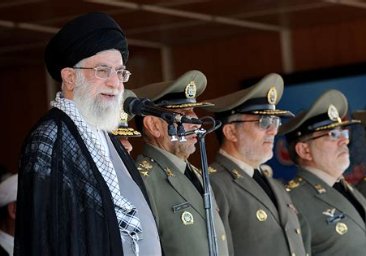
Iran’s policy is rooted in Khomeinism: religious universalism plus anti-imperialism, under Wilayat al-Faqih (Guardianship of the Islamic Jurist). The Supreme Leader acts as deputy of the Hidden Imam with claimed authority over the global ummah. Export of the revolution, support for the oppressed, and resistance to the “Great Satan” (United States), “Little Satan” (Israel), and Gulf collaborators are constitutional duties.
Short-term objectives include regime survival at any cost, deterring US/Israeli action, evading sanctions, expanding the Axis of Resistance (Hezbollah, Houthis, Iraqi militias, Hamas/PIJ), organizing and arming Shia populations regionally, and maintaining nuclear ambiguity for leverage.
Long-term ideological goals are a pan-Islamic (ultimately global) order under Iranian leadership, elimination of Israel, expulsion of US influence, wresting ummah leadership from Sunni powers, and generating conditions for the Mahdi’s appearance.
Core strategy favors forward defense and asymmetric warfare: proxy networks, ballistic missiles/UAVs/anti-ship systems for Strait of Hormuz area denial, nuclear threshold capability, hybrid tools (cyber, disinformation), tactical alliances with China and Russia, and patient opportunism.
IRGC, Quds Force, and Basij
After 1979, Khomeini inherited the royal army and police force, which he distrusted, and most undemocratically created parallel forces loyal only to him. He created the Islamic Revolutionary Guard Corps (IRGC) to protect his personal interpretation of Twelver Shia Islamic Republic ideology, domestic security, and external operations. Its elite Quds Force trains, arms, and directs global narco-terror organizations, controls and directs non-state Shia militia proxies in other sovereign states, and conducts covert actions in other countries. The Basij is a mass volunteer militia, separate from the regular police force and under IRGC command, responsible for internal control, suppression of internal dissent, ideological enforcement, and reserve mobilization.
Importantly, the IRGC, Quds Force, and Basij—which report directly to the Supreme Leader—form a powerful parallel structure in Iranian politics, distinct from the regular national army and police force. Moreover, the IRGC, Quds Force, and Basij receive budgetary outlays several times larger than those of the national army; they directly control over 50% of the Iranian economy, hold a monopoly over defense production, national infrastructure contracts, nuclear R&D, missile and drone programs, and a bulk of oil revenue, and thus effectively own roughly 50% of Iran’s GDP without accountability to the Iranian people.
Rise of Shia Iran and Sectarian Rivalries
The 1979 revolution altered regional balances and awakened a distinct Shia political consciousness. Revolutionary ideology began to be exported, alarming Sunni-dominated Arab monarchies, especially Saudi Arabia. Saddam Hussein, fearing contagion among Iraq’s Shia majority, invaded Iran in 1980, hoping to seize Khuzestan and assert Sunni Arab dominance. The eight-year Iran-Iraq War ended in stalemate; Khomeini used it to consolidate the revolution under the banner of Iranian nationalism and Shia defense.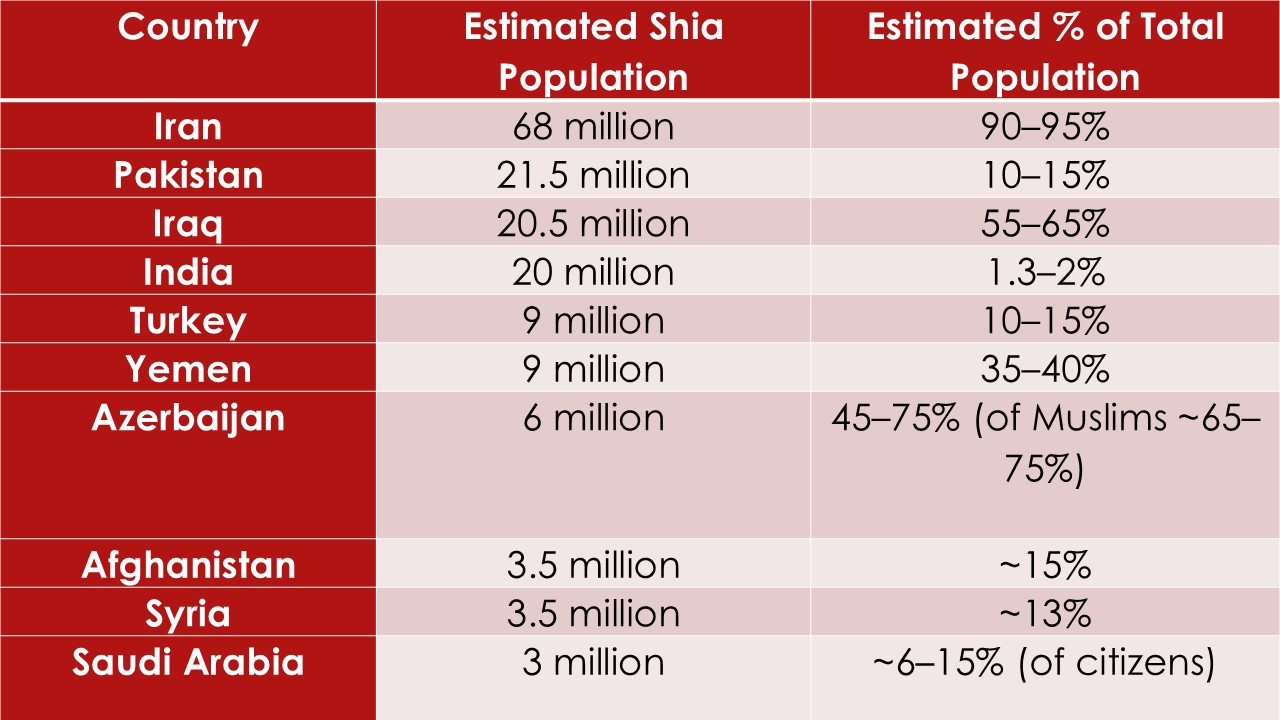
US-Iran tensions kept simmering since 1979 through sanctions, proxy activity, nuclear development, and missile programs. The 2015 President Obama’s JCPOA to curb Iran’s nuclear ambition collapsed under the first Trump administration. By 2025, concerns over Iran’s advancing nuclear capabilities and the arming of proxies had reached crisis levels in the United States, Israel, and the Gulf.
Abraham Accords and the 7 October Trigger
The 2020 Abraham Accords normalized Israel–Arab ties (UAE, Bahrain, Morocco, Sudan, etc.), aiming to contain Tehran and foster economic development. Prospects of Saudi and Kuwaiti participation threatened Iranian ambitions. Iran’s support for the events beginning 7 October 2023 appears driven in significant part by the desire to derail further Accords expansion. The regime underestimated the scale of Israeli and American response resolve and to curb its ambitions, which escalated beyond its control into the present war.
Iran’s Obsessive Focus on Palestine and Israel
For a non-Arab, geographically distant Shia Iran—with no shared border, no historical territorial dispute, and pre-1979 cooperative ties with Israel (including under the Pahlavis)—the positioning of the Palestinian cause and destruction of Israel at the center of its national objective, requires explanation.
The Palestinian-Israel Paradox
The Palestinian cause, in middle east politics, has long served as an ideological tool rather than an end in itself. Arab League leaders, especially Nasser, used it for Pan-Arabism. Yet when Egypt controlled Gaza and Jordan annexed the West Bank (1948–1967), neither pressed for Palestinian statehood. Only after the 1967 defeat did the cause revive. The Soviet Union promoted it primarily to counter US influence, allegedly aiding creation of a distinct Palestinian identity and the PLO.
After further Arab defeats, the Muslim Brotherhood elevated the cause within an anti-Western, rejectionist framework aimed at Israel’s elimination rather than a two-state solution. Today most Sunni Arab rulers treat it as largely abandoned rhetoric while pursuing pragmatic ties with Israel.
Why Shia Iran Espoused a Distant Sunni Cause
As already stated above, no issue is leveraged more in Middle East politics than Palestine. It acts as emotional glue across a fractured Islamic world rife with sectarian hatred. Khomeini understood this. By 2005 Israel had withdrawn from Gaza seeking a two-state path; Hamas then seized control in 2006 and rejected peace. As Sunni Arab support waned, Khamenei filled the vacuum, backing Hamas to legitimize Iranian ambitions under the oppressor-oppressed doctrine and to portray Sunni states negatively. Hamas was added to the IRGC-directed proxy network alongside Hezbollah, creating a “ring of fire” to intimidate Gulf states and bleed Israel through low-intensity conflict. Israel’s massive post-7 October response was therefore, aimed at , not just to punish the perpetrators but to destroy its authors- Hamas, Hezbollah, and IRGC , and their capacity to pose existential threats of this magnitude to Israel and the Sunni states of middle -east in future.
Conclusion
Iran’s Islamic regime—shaped by Khomeini, institutionalized by Khamenei, and operationalized by the IRGC—is not a conventional nation-state. It is the self-proclaimed vanguard of the Mahdi. Anti-Zionism, anti-Americanism, and proxy warfare are eschatological acts preparing the ground for divine justice, blended with pragmatic survival measures.
A theological state driven by apocalyptic ideology, pursuing regional and global revisionism, seeking nuclear weapons, and controlling a critical global chokepoint threatens not only the United States, Israel, and Sunni Middle Eastern states but global peace and stability. Subduing the IRGC as a jihadi organization, freeing Iran from its control, and restoring a moderate, progressive government therefore serve the vital interests of the international community.
The conflict is not yet concluded. Its outcome hinges on whether the IRGC survives the economic, military, and political pressure applied by the United States or not. The future of Middle East politics—and wider geopolitics—depends heavily on the answer.