Indus Research
No Result
View All Result
Thursday, October 8, 2026
login
  • Home
  • About
    • Who We Are
    • Patrons
    • Governing Board
    • Advisors
    • Directors
    • Editorial Board
    • Support IIRF
  • Themes
    • International Relations & Security
      • Land Security
      • Maritime Security
      • Aerospace Security
      • Nuclear
      • Geopolitics
    • History
    • Military Doctrine & Strategy
      • Doctrines
      • Joint and Integrated Defence
      • Civil Military Relations
    • Science and Technology
      • Defence Technology
      • Industries and Society
      • Climate Change
      • Natural Resources
    • Economics and Commerce
      • Rare Earth
      • Maritime Economy
      • International Trade
    • Education
  • Focus Geographies
    • South Asian Connectivity & Cooperation
      • Afghanistan
      • Pakistan
      • Nepal
      • Bhutan
      • Bangladesh
      • Myanmar
      • Sri Lanka
      • Maldives
      • BIMSTEC
      • SAARC
      • SAGQ
      • BBIN
      • BRI
      • INSTC
      • IORA
      • MGC
      • IMT
    • Indo-Pacific
      • Indo-Pacific Economic Forum
      • QUAD
      • Oceania
      • IORA
      • Middle East
    • Indo-US Relations
    • Central Asia and Russia
  • Publications
    • Commentary
    • Issue Briefs
    • Research Paper
    • Monograph
    • Journal Articles
    • Books
    • Book reviews
    • Contributors
    • Submission Rules
    • IIRF Strategic Year Book – 2022-23
    • IIRF Strategic Yearbook – 2024
    • IIRF Strategic Yearbook – 2025
    • IIRF Strategic Yearbook – 2026
  • Membership
    • Membership Form
  • Indo-US Forum
  • Indian Knowledge System
    • Arts & Culture
    • Yoga & Health
    • Sanskrit Vedic Science Spirituality
  • IIRF Creativity Zone
  • Contact
  • Events & Media
    • IIRF EVENTS
    • US-India Business Connect 2025
    • WTC Utah’s India Trade Mission 2024 Gallery
    • Videos
  • language
    • Hindi
  • Home
  • About
    • Who We Are
    • Patrons
    • Governing Board
    • Advisors
    • Directors
    • Editorial Board
    • Support IIRF
  • Themes
    • International Relations & Security
      • Land Security
      • Maritime Security
      • Aerospace Security
      • Nuclear
      • Geopolitics
    • History
    • Military Doctrine & Strategy
      • Doctrines
      • Joint and Integrated Defence
      • Civil Military Relations
    • Science and Technology
      • Defence Technology
      • Industries and Society
      • Climate Change
      • Natural Resources
    • Economics and Commerce
      • Rare Earth
      • Maritime Economy
      • International Trade
    • Education
  • Focus Geographies
    • South Asian Connectivity & Cooperation
      • Afghanistan
      • Pakistan
      • Nepal
      • Bhutan
      • Bangladesh
      • Myanmar
      • Sri Lanka
      • Maldives
      • BIMSTEC
      • SAARC
      • SAGQ
      • BBIN
      • BRI
      • INSTC
      • IORA
      • MGC
      • IMT
    • Indo-Pacific
      • Indo-Pacific Economic Forum
      • QUAD
      • Oceania
      • IORA
      • Middle East
    • Indo-US Relations
    • Central Asia and Russia
  • Publications
    • Commentary
    • Issue Briefs
    • Research Paper
    • Monograph
    • Journal Articles
    • Books
    • Book reviews
    • Contributors
    • Submission Rules
    • IIRF Strategic Year Book – 2022-23
    • IIRF Strategic Yearbook – 2024
    • IIRF Strategic Yearbook – 2025
    • IIRF Strategic Yearbook – 2026
  • Membership
    • Membership Form
  • Indo-US Forum
  • Indian Knowledge System
    • Arts & Culture
    • Yoga & Health
    • Sanskrit Vedic Science Spirituality
  • IIRF Creativity Zone
  • Contact
  • Events & Media
    • IIRF EVENTS
    • US-India Business Connect 2025
    • WTC Utah’s India Trade Mission 2024 Gallery
    • Videos
  • language
    • Hindi
No Result
View All Result
Indus Research
No Result
View All Result
Home Commentary

Captain Smit Machchhar: An “Inconvenient Hero” for Many Indians and the Western Media? -by Brigadier Hemant Mahajan (Retd)

by Brig Hemant Mahajan
October 7, 2026
in Commentary, Geopolitics, International Relations & Security
0
Captain Smit Machchhar: An “Inconvenient Hero” for Many Indians and the Western Media? -by Brigadier Hemant Mahajan (Retd)
Total
0
Shares
Share 0
Tweet 0
Share 0
Share 0
Share 0

For many Indians and sections of the Western media, Captain Smit Machchhar has become what may be described as an “inconvenient hero.”

On September 30, 2026, FlyDubai Flight FZ1073, operating from Dubai to Tel Aviv, experienced a serious and unprecedented crisis. Within seconds, the aircraft lost nearly 14,000 feet of altitude. A physical struggle had erupted inside the cockpit between the pilots. The situation was so severe that the aircraft transmitted the 7500 transponder code, which in international aviation is recognized as an indication of hijacking or unlawful interference.

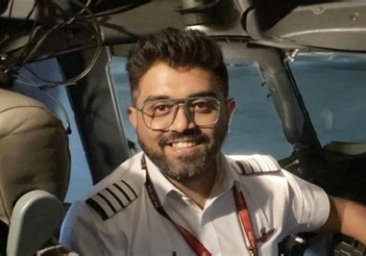
The aircraft subsequently made an emergency landing at Tabuk Airport in Saudi Arabia. Captain Smit Machchhar, an Indian pilot of Gujarati origin, resisted an attempt by his Omani co-pilot to seize control of the aircraft and deliberately crash it. During the struggle, Captain Machchhar sustained serious injuries. Despite his condition, he managed to open the cockpit door, allowing passengers and off-duty flight personnel to enter and assist. Through the combined efforts of Captain Machchhar and other crew members, the attacker was subdued and control of the aircraft was stabilized.

As more details of the incident have gradually emerged, the coverage by several Western and international media organizations has become the subject of considerable debate. Questions have been raised regarding the terminology used, the framing of the story, and the neglect of individual heroism shown by an Indian.

Media Terminology and Narrative Framing

A review of the initial headlines published by various media organizations reveals a distinct pattern.

CNN described the incident as a “violent altercation between two pilots,” despite being aware of the broader circumstances surrounding the event.

The New York Times reported that the aircraft was diverted following “an altercation between the pilot and co-pilot,” even though the aircraft had transmitted the 7500 transponder code, a universally recognized signal indicating hijacking or unlawful interference.

AFP reported that “two pilots were injured after fighting each other.” The Wall Street Journal referred to “a struggle in the cockpit that left both pilots injured,” while Sky News described the event as a “brawl between pilots.” BBC similarly reported that an Israel-bound flight had been diverted after “a fight between pilots.”

A common pattern can be observed across these headlines. The attempted takeover of the cockpit, the activation of the 7500 emergency code, and the grave threat posed to the lives of hundreds of passengers were relegated to the background. Instead, the incident was framed as a “fight,” “altercation,” “brawl,” or “struggle.”

Sections of the Western media have become increasingly irresponsible, particularly when it comes to acknowledging the achievements or heroism of Indians and achievements of India as a country.

The Impact of Linguistic Framing

Journalists covering breaking crises are expected to exercise caution in their language. However, word choice is not merely a technical matter; it shapes public understanding of events.

If a pilot activates the 7500 emergency code, endures a physical assault, and continues fighting to maintain control of an aircraft, describing the incident as a “brawl” can be misleading. Such language creates a false equivalence between the aggressor and the defender.

Based on the information available, this was not a routine workplace dispute between two crew members. It was a situation that posed a potentially catastrophic threat to aviation safety. Characterizing it as a “fight” diminishes the seriousness of the event and presents the public with an incomplete picture.

The Erasure of Heroism

In the early stages of reporting, Captain Smit Machchhar’s name, nationality, and specific role were often omitted. The generic description of “two pilots” obscured the fundamental distinction between an attacker and a defender.

Inside the cockpit, one individual was attempting to seize control of the aircraft, while the other was fighting to save the lives of more than 174 passengers. Yet many early reports portrayed both individuals in symmetrical terms.

As a result, what was fundamentally a story of extraordinary courage was transformed into a sterile narrative about a “dispute between two pilots.” Consequently, Captain Machchhar’s bravery did not receive the recognition it deserved during the crucial initial phase of reporting.

Institutional Caution or Bias Against India?

Journalistic caution requires waiting for official investigations before labeling an event as a hijacking, terrorist act, or similar incident. However, available technical indicators—including the aircraft’s sudden loss of altitude, the transmission of the 7500 emergency code, and the emergency landing—strongly suggested that this was far more serious than a routine disagreement between crew members.

These crucial indicators were largely ignored in much of the initial reporting.

The “Inconvenient Hero”

Despite sustaining serious injuries, Captain Machchhar displayed remarkable courage. He opened the cockpit door, enabled assistance to reach the cockpit, and played a critical role in helping save hundreds of lives. By any reasonable standard, such actions merit recognition and admiration.

However  ideological biases, identity politics, and preconceived narratives have made certain sections of the media reluctant to highlight his heroism.

Had the pilot belonged to a different social, religious, or cultural back ground ,say he was Capt Smith or Capt Salim the media response might have been significantly different.

This debate has raised broader questions about representation, identity, and the standards by which heroism is acknowledged in western media public discourse.

Media, Identity, and Double Standards

In democratic societies, the media does more than merely report facts. It also influences who is celebrated as a hero, which events receive prominence, and which narratives dominate public discussion.

The FZ1073 incident therefore raises an important question: Do we evaluate heroism on the basis of actions, or through the lens of identity?

If an individual has played a decisive role in saving hundreds of lives, then recognition should be based on courage and performance rather than religion, nationality, ethnicity, or political affiliation.

Conclusion

The FlyDubai FZ1073 incident is more than just an aviation emergency. It has become a significant case study in media framing, narrative construction, and the public recognition of heroism.

The events inside the cockpit were not merely a “fight” or a “dispute.” They represented a grave threat to the safety of the aircraft and everyone on board. In such circumstances, the courage, leadership, and professionalism displayed by Captain Smit Machchhar deserve acknowledgment.

Official aviation investigations will ultimately establish the full facts of the incident. Nevertheless, the episode already offers an important lesson: the words used by the media during a crisis do not merely describe events—they shape public perception of them. And sometimes, through inaccurate or incomplete framing, the story of a genuine hero can be pushed into the background.

For many Indians and for many within the Western media, Captain Smit Machchhar became an “inconvenient hero.” Although he displayed exceptional courage, some appeared uncomfortable celebrating his actions. Had his name been Smith or Salim rather than Smit, the praise for his heroism might have been far more enthusiastic.

Many Indians, driven by electoral and identity-based politics, have also chosen to overlook Captain Machchhar’s actions. Similarly, some in the Western media appear reluctant to highlight an act of extraordinary bravery performed by an Indian. Instead, they seek to diminish its significance by suggesting that “the incident was not that serious” or that “anyone could have done the same thing.”

In reality, stepping forward under such circumstances, accepting immense personal risk, and demonstrating courage of this magnitude is far from ordinary.

Israeli Prime Minister Benjamin Netanyahu, as well as the political leadership of Saudi Arabia and the United Arab Emirates, visited Captain Machchhar in hospital and praised his actions. Indian Prime Minister Narendra Modi also spoke with him through a video call.

Yet many major Indian newspapers, television channels, and prominent Western media organizations have continued to give the incident relatively limited attention. The reasons for this, readers may judge for themselves.

Total
0
Shares
Share 0
Tweet 0
Pin it 0
Share 0
Share 0

Leave a Reply Cancel reply

Your email address will not be published. Required fields are marked *

Recent Posts

Captain Smit Machchhar: An “Inconvenient Hero” for Many Indians and the Western Media? -by Brigadier Hemant Mahajan (Retd)

Captain Smit Machchhar: An “Inconvenient Hero” for Many Indians and the Western Media? -by Brigadier Hemant Mahajan (Retd)

October 7, 2026
Abraham Accord –Is it the Only Option Left with MBS ?  – by Gp Capt RS Mehta (Retd)

Abraham Accord –Is it the Only Option Left with MBS ?  – by Gp Capt RS Mehta (Retd)

September 20, 2026
Social Media: Tool of Information or new Mental Battlefield?  Deepfake in the Indian Context and  the Need for a National Cognitive Security Architecture  by Brigadier Hemant Mahajan (Retd)

Social Media: Tool of Information or new Mental Battlefield? Deepfake in the Indian Context and the Need for a National Cognitive Security Architecture by Brigadier Hemant Mahajan (Retd)

September 14, 2026
USS Abraham Lincoln Crisis, Military Fatigue, and the Future of Long Wars: Strategic Lessons for India  Introduction: A Warning Signal for Modern Militaries – by Brigadier Hemant Mahajan (Retd)

USS Abraham Lincoln Crisis, Military Fatigue, and the Future of Long Wars: Strategic Lessons for India Introduction: A Warning Signal for Modern Militaries – by Brigadier Hemant Mahajan (Retd)

September 2, 2026

August 31, 2026

August 31, 2026

<strong>About IIRF</strong>

Indus International Research Foundation is a New Delhi based organisation with its overseas centre at USA . It is part of a global network of scholars, professionals and veterans based in India and abroad. The Foundation focuses primarily on international relations, Indian heritage, political economy and security studies. Led by experts with decades of international and domestic policy experience, IIRF India engages with governments, policymakers, academics, students, industries, practitioners, and civil society to provide insightful and fresh analysis of global trends and India’s challenging role as an emerging world leader. Foundation also runs special programs for veterans.

Office Addresses

Delhi NCR
F-511, Jalvayu Towers, Sector-47, Noida, Gautam Budh Nagar, UP, India – 201301
Email – contact@indusresearch.in
Mobile :- +91 8588021407

USA
India International Research Foundation, 2105 Long Park Avenue Prosper 75078, Dallas, Texas, USA Email – infousa@indusresearch.in

Bangalore
Indus International Research Foundation, Parkside Brigade Orchards, Devanhalli, Bangalore, Karnataka -562110

Explore IIRF

  • Links
  • International Relations & Security
  • History
  • Military Doctrine & Strategy
  • Science and Technology
  • Economics and Commerce
  • Education
  • IIRF Creativity Zone
  • Membership
  • Support IIRF

© 2022 Indus Research

No Result
View All Result
  • Home
  • About
    • Who We Are
    • Patrons
    • Governing Board
    • Advisors
    • Directors
    • Editorial Board
    • Support IIRF
  • Themes
    • International Relations & Security
      • Land Security
      • Maritime Security
      • Aerospace Security
      • Nuclear
      • Geopolitics
    • History
    • Military Doctrine & Strategy
      • Doctrines
      • Joint and Integrated Defence
      • Civil Military Relations
    • Science and Technology
      • Defence Technology
      • Industries and Society
      • Climate Change
      • Natural Resources
    • Economics and Commerce
      • Rare Earth
      • Maritime Economy
      • International Trade
    • Education
  • Focus Geographies
    • South Asian Connectivity & Cooperation
      • Afghanistan
      • Pakistan
      • Nepal
      • Bhutan
      • Bangladesh
      • Myanmar
      • Sri Lanka
      • Maldives
      • BIMSTEC
      • SAARC
      • SAGQ
      • BBIN
      • BRI
      • INSTC
      • IORA
      • MGC
      • IMT
    • Indo-Pacific
      • Indo-Pacific Economic Forum
      • QUAD
      • Oceania
      • IORA
      • Middle East
    • Indo-US Relations
    • Central Asia and Russia
  • Publications
    • Commentary
    • Issue Briefs
    • Research Paper
    • Monograph
    • Journal Articles
    • Books
    • Book reviews
    • Contributors
    • Submission Rules
    • IIRF Strategic Year Book – 2022-23
    • IIRF Strategic Yearbook – 2024
    • IIRF Strategic Yearbook – 2025
    • IIRF Strategic Yearbook – 2026
  • Membership
    • Membership Form
  • Indo-US Forum
  • Indian Knowledge System
    • Arts & Culture
    • Yoga & Health
    • Sanskrit Vedic Science Spirituality
  • IIRF Creativity Zone
  • Contact
  • Events & Media
    • IIRF EVENTS
    • US-India Business Connect 2025
    • WTC Utah’s India Trade Mission 2024 Gallery
    • Videos
  • language
    • Hindi

© 2022 Indus Research