Indus Research
No Result
View All Result
Thursday, April 30, 2026
login
  • Home
  • About
    • Who We Are
    • Patrons
    • Governing Board
    • Advisors
    • Directors
    • Editorial Board
    • Support IIRF
  • Themes
    • International Relations & Security
      • Land Security
      • Maritime Security
      • Aerospace Security
      • Nuclear
      • Geopolitics
    • History
    • Military Doctrine & Strategy
      • Doctrines
      • Joint and Integrated Defence
      • Civil Military Relations
    • Science and Technology
      • Defence Technology
      • Industries and Society
      • Climate Change
      • Natural Resources
    • Economics and Commerce
      • Rare Earth
      • Maritime Economy
      • International Trade
    • Education
  • Focus Geographies
    • South Asian Connectivity & Cooperation
      • Afghanistan
      • Pakistan
      • Nepal
      • Bhutan
      • Bangladesh
      • Myanmar
      • Sri Lanka
      • Maldives
      • BIMSTEC
      • SAARC
      • SAGQ
      • BBIN
      • BRI
      • INSTC
      • IORA
      • MGC
      • IMT
    • Indo-Pacific
      • Indo-Pacific Economic Forum
      • QUAD
      • Oceania
      • IORA
      • Middle East
    • Indo-US Relations
    • Central Asia and Russia
  • Publications
    • Commentary
    • Issue Briefs
    • Research Paper
    • Monograph
    • Journal Articles
    • Books
    • Book reviews
    • Contributors
    • Submission Rules
    • IIRF Strategic Year Book – 2022-23
    • IIRF Strategic Yearbook – 2024
  • Membership
    • Membership Form
  • Indo-US Forum
  • Indian Knowledge System
    • Arts & Culture
    • Yoga & Health
    • Sanskrit Vedic Science Spirituality
  • IIRF Creativity Zone
  • Contact
  • Events & Media
    • IIRF EVENTS
    • US-India Business Connect 2025
    • WTC Utah’s India Trade Mission 2024 Gallery
    • Videos
  • language
    • Hindi
  • Home
  • About
    • Who We Are
    • Patrons
    • Governing Board
    • Advisors
    • Directors
    • Editorial Board
    • Support IIRF
  • Themes
    • International Relations & Security
      • Land Security
      • Maritime Security
      • Aerospace Security
      • Nuclear
      • Geopolitics
    • History
    • Military Doctrine & Strategy
      • Doctrines
      • Joint and Integrated Defence
      • Civil Military Relations
    • Science and Technology
      • Defence Technology
      • Industries and Society
      • Climate Change
      • Natural Resources
    • Economics and Commerce
      • Rare Earth
      • Maritime Economy
      • International Trade
    • Education
  • Focus Geographies
    • South Asian Connectivity & Cooperation
      • Afghanistan
      • Pakistan
      • Nepal
      • Bhutan
      • Bangladesh
      • Myanmar
      • Sri Lanka
      • Maldives
      • BIMSTEC
      • SAARC
      • SAGQ
      • BBIN
      • BRI
      • INSTC
      • IORA
      • MGC
      • IMT
    • Indo-Pacific
      • Indo-Pacific Economic Forum
      • QUAD
      • Oceania
      • IORA
      • Middle East
    • Indo-US Relations
    • Central Asia and Russia
  • Publications
    • Commentary
    • Issue Briefs
    • Research Paper
    • Monograph
    • Journal Articles
    • Books
    • Book reviews
    • Contributors
    • Submission Rules
    • IIRF Strategic Year Book – 2022-23
    • IIRF Strategic Yearbook – 2024
  • Membership
    • Membership Form
  • Indo-US Forum
  • Indian Knowledge System
    • Arts & Culture
    • Yoga & Health
    • Sanskrit Vedic Science Spirituality
  • IIRF Creativity Zone
  • Contact
  • Events & Media
    • IIRF EVENTS
    • US-India Business Connect 2025
    • WTC Utah’s India Trade Mission 2024 Gallery
    • Videos
  • language
    • Hindi
No Result
View All Result
Indus Research
No Result
View All Result
Home Commentary

India, Indian Ocean Region and the Unfolding Geopolitical Landscape  by Vice Admiral Shekhar Sinha

by Vice Admiral Shekhar Sinha
January 16, 2024
in Commentary, Economics and Commerce, Geopolitics, HISTORY, Home, International Issues, International relations & Geopolitics, International Relations & Security, IORA, Maldives, Maritime Security, Middle East, Military Doctrine & Strategy
0
India, Indian Ocean Region and the Unfolding Geopolitical Landscape  by Vice Admiral Shekhar Sinha
Total
0
Shares
Share 0
Tweet 0
Share 0
Share 0
Share 0

Turbulent waters will require the proven intellect of Prime Minister Modi and his seasoned and acknowledged diplomat, External Affairs Minister Jaishankar

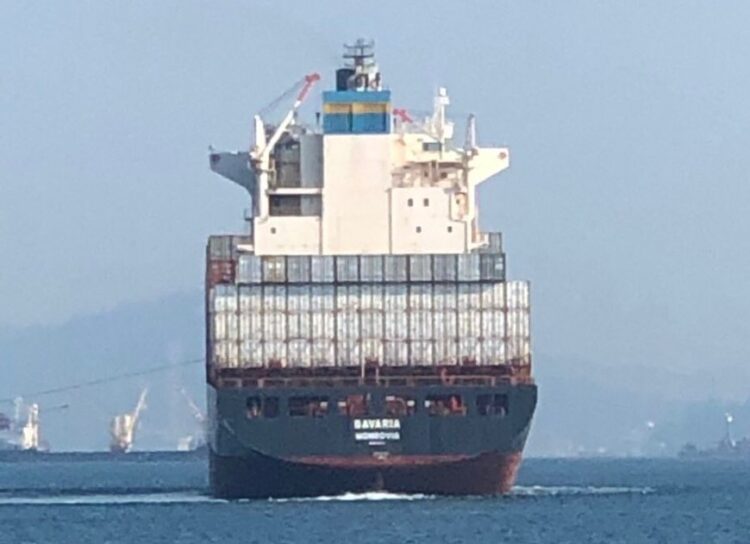
In 2010/11 Robert D Kaplan, a famous thinker of geopolitics, wrote in his book Monsoon-Indian Ocean and the Future of American Power describing the future changes in the greater Indian Ocean, “Chinese naval expansion originating in the eastern end of the Greater Indian Ocean, and at the western end take a peek at African renewal through the prism of Zanzibar”. He goes on further to describe the ‘ceaseless currents of historical change as they shape the contours of the new century. It is the intermingling of challenges in each place- religious, economic, political, environmental than each challenge in isolation, that creates such drama.”This seems to playing out in the Western Indian Ocean Region.Israel-Hamas conflict and incognito indulgence of Iran through Hezbollah and reactionary measures by Houthis, who control 70 per cent of Yemen (backed by Iran) but are ruled by a government backed by Saudi Arabia. It is the indiscriminate targeting of merchant ships in the Red Sea carrying world trade and energy which is impeding the right of innocent passage and freedom of navigation, leading to US Navy and Royal Navy ships targeting Houthi strongholds in Yemen. There have been calls from Saudi for restraint and not to escalate.
Iran has warned of consequences. US and UK have reiterated that the action aligns with international laws to protect world trade and the economy.It is unlikely that US will allow these threats to prevent its action given the strength of US Navy seems uncertain due to America’s economic travails and the diversionary cost of its support to land conflicts between Ukraine and Russia and Israel-Hamas in Gaza. This could act as a warning to the emerging axis that US power is not declining at all. However, as a student of geopolitics, one can observe that five centuries of Westfalen preponderance is gradually declining towards closure. People’s Republic of China has directed its Navy to jump into the fray to protect ships carrying goods/energy to and from its ports. Today PLA Navy has more ships than the US Navy and bases /ports in the IOR to support its operations. These are classical manifestations of terrorism/conflicts over land spilling over into the seas, in turn making it a maritime security challenge which has wider implications for human prosperity and development.Robert Kaplan was quite right in his book ‘Monsoon’ where he says “The Indian Ocean Region is more than just a stimulating geography. It is an idea because it provides an insightful visual impression of Islam, and combines the centrality of Islam with global energy politics and the importance of world navies, to show us a multi-layered, multipolar world above and beyond headlines in Iraq and Afghanistan, it is also an idea because it allows us to see the world whole, within a very new and yet very old framework, complete with its own traditions and characteristics, without having to drift into bland nostrums about globalization.”In this entire maze of complex dynamics India, being a preferred security partner for many in the region, has deployed 8-10 warships all over the Arabian Sea, the playground in which this entire geopolitics is unfolding. This supports the security of traders transiting out of the Red Sea/ rounding Cape of Good Hope through the vast expanse of the Indian Ocean. A clear assurance to the world that India will deploy its Navy and protect the global commons.
Should India be joining the US and Royal Navies as some commentators have been suggesting? India is not a world power yet. Even amongst the Western allies, no other country has made any commitment indicating the diplomatic path rather than the military. EU is already a fractured Union, on account of Eurasian conflicts. Prime Minister Narendra Modi had mentioned when Ukraine Ukraine-Russia conflict was expanding in scope and areas that “it is not an era of war”. That holds good even now. External Affairs Minister S Jaishankar’s visit to Iran could be an effort in that direction. Jumping into this fray is fraught with diplomatic dilemmas. India’s equation with both, Saudi Arabia and Iran, are extremely good and important. Any armed strikes on Yemen to silence Houthis to protect our shipping would have adverse diplomatic fallout with both these countries. While Iran has issued a warning to US and UK, Saudi has cautioned against expanding the attacks into a wider conflict. Jaishankar had been spoken to by Secretary Antony Blinken before he left for Tehran. The external affairs minister’s conversation in Iran is important not only for Indian trade ships but also for global shipping movement through the Red Sea.  It may be recalled that two ships in the Arabian Sea were struck with weapons fired from drones causing heavy damage to the ships. Indian Navy and Coast Guard quickly arrived at the spot and doused the fire and ensured the safety of the crew and rest of the ship. It was later escorted to Indian harbours for repairs. Though US intelligence blamed Iran for the ownership of these drones, India hasn’t made any comments. It is nearly certain that Jaishankar will raise this issue too.

In the middle of these serious issues, there was a hijacking attempt by pirates in the Arabian Sea. Indian Navy responded to the distress call and a destroyer in the company of P8-I Maritime Patrol aircraft & MQ 9 (Sea Guardian) Long endurance UAV intercepted the ship. Subsequently, Indian Navy Marine Commandos boarded the ship and ensured the safety of the crew. The warnings given by P8-I while overflying the ship being hijacked led to the fleeing of pirates by the time the MARCOS began the search of the ship’s compartments. It signals the assurance the Indian Navy can provide to shipping transiting through the Indian Ocean which is already under stress.In the meantime, the presidential election in Maldives has thrown new challenges in our neighborhood. Mohamed Muizzu, the new president, recently paid a visit to China. Twenty agreements have been signed between the two countries, of which reading between the lines would be in progress. Two statements by the Maldivian President, on his return from China, point to the headwinds India is likely to face in its bilateral relations with Maldives. A deadline for the return of Indian aircraft and helicopters along with maintenance crew has been set as 15 March.While Chinese influence is visible, the matter which concerns most is the possibility of the Pakistan Navy replacing Indian assets and crew in Maldives acting as a proxy of China. This gives China winning without fighting, an old Sun Tzu principle that they have imbibed in all their dealings. This may also lead to a further increase in Salafi activities in Maldives. The country has seen the largest density of terrorists who have joined ISIS. This would pose a serious concern and complex challenge that India is headed into.To begin with, US and its allies will have to revisit their policy on the Ukraine-Russia conflict which is germane to the Red Sea Houthi challenge which has the potential of expanding into regional and global instability. The arrival of the PLA Navy and its recent affair with the new presidency in Maldives adds to geopolitical woes for the US. Some internal dynamics in Maldives nascent democracy could alter the present quagmire. We should not forget that a former president and speaker, Mohamed Nasheed is still in active politics and capable of altering public opinion in the island state.How India navigates through these turbulent waters will require all of the proven intellect of Prime Minister Modi and his seasoned and acknowledged diplomat External Affairs Minister Jaishankar.

Acknowledgement :- This article was first published at ‘First Post’ on January 15, 2024 14:38:14 IST . This is a reprint. The author is Member, Trustee Board, India Foundation, Former Chief of Integrated Defence Staff &Commander in Chief, Western Naval Command. Views are personal. Views are authors own.

Total
0
Shares
Share 0
Tweet 0
Pin it 0
Share 0
Share 0

Leave a Reply Cancel reply

Your email address will not be published. Required fields are marked *

Recent Posts

BREAKING GLASS CEILING – Col Vijaykant Chenji (Retd)

BREAKING GLASS CEILING – Col Vijaykant Chenji (Retd)

April 21, 2026
Lessons For India: Learning From USA-Iran War – by Brigadier Hemant Mahajan (Retd)

Lessons For India: Learning From USA-Iran War – by Brigadier Hemant Mahajan (Retd)

April 21, 2026
WAR WITHOUT FRONTIERS : How Modern Conflict is Redefining Victory  – by Col Vijay Chenji (Retd)

WAR WITHOUT FRONTIERS : How Modern Conflict is Redefining Victory – by Col Vijay Chenji (Retd)

April 5, 2026
Naval Confrontation in the Strait of Hormuz: American Aircraft Carriers vs Iran’s ‘Choke-Point’ Strategy – by Brigadier Hemant Mahajan

Naval Confrontation in the Strait of Hormuz: American Aircraft Carriers vs Iran’s ‘Choke-Point’ Strategy – by Brigadier Hemant Mahajan

April 4, 2026
From NATO to a New Security Structure in Europe – By C.M.A.Nayar

From NATO to a New Security Structure in Europe – By C.M.A.Nayar

March 31, 2026
Trump’s endgame: Could Israel bear the brunt of Iran conflict? – by Lt Gen C.A. Krishnan (retd)

Trump’s endgame: Could Israel bear the brunt of Iran conflict? – by Lt Gen C.A. Krishnan (retd)

March 24, 2026

<strong>About IIRF</strong>

Indus International Research Foundation is a New Delhi based organisation with its overseas centre at USA . It is part of a global network of scholars, professionals and veterans based in India and abroad. The Foundation focuses primarily on international relations, Indian heritage, political economy and security studies. Led by experts with decades of international and domestic policy experience, IIRF India engages with governments, policymakers, academics, students, industries, practitioners, and civil society to provide insightful and fresh analysis of global trends and India’s challenging role as an emerging world leader. Foundation also runs special programs for veterans.

Office Addresses

Delhi NCR
F-511, Jalvayu Towers, Sector-47, Noida, Gautam Budh Nagar, UP, India – 201301
Email – contact@indusresearch.in
Mobile :- +91 8588021407

USA
India International Research Foundation, 2105 Long Park Avenue Prosper 75078, Dallas, Texas, USA Email – infousa@indusresearch.in

Bangalore
Indus International Research Foundation, Parkside Brigade Orchards, Devanhalli, Bangalore, Karnataka -562110

Explore IIRF

  • Links
  • International Relations & Security
  • History
  • Military Doctrine & Strategy
  • Science and Technology
  • Economics and Commerce
  • Education
  • IIRF Creativity Zone
  • Membership
  • Support IIRF

© 2022 Indus Research

No Result
View All Result
  • Home
  • About
    • Who We Are
    • Patrons
    • Governing Board
    • Advisors
    • Directors
    • Editorial Board
    • Support IIRF
  • Themes
    • International Relations & Security
      • Land Security
      • Maritime Security
      • Aerospace Security
      • Nuclear
      • Geopolitics
    • History
    • Military Doctrine & Strategy
      • Doctrines
      • Joint and Integrated Defence
      • Civil Military Relations
    • Science and Technology
      • Defence Technology
      • Industries and Society
      • Climate Change
      • Natural Resources
    • Economics and Commerce
      • Rare Earth
      • Maritime Economy
      • International Trade
    • Education
  • Focus Geographies
    • South Asian Connectivity & Cooperation
      • Afghanistan
      • Pakistan
      • Nepal
      • Bhutan
      • Bangladesh
      • Myanmar
      • Sri Lanka
      • Maldives
      • BIMSTEC
      • SAARC
      • SAGQ
      • BBIN
      • BRI
      • INSTC
      • IORA
      • MGC
      • IMT
    • Indo-Pacific
      • Indo-Pacific Economic Forum
      • QUAD
      • Oceania
      • IORA
      • Middle East
    • Indo-US Relations
    • Central Asia and Russia
  • Publications
    • Commentary
    • Issue Briefs
    • Research Paper
    • Monograph
    • Journal Articles
    • Books
    • Book reviews
    • Contributors
    • Submission Rules
    • IIRF Strategic Year Book – 2022-23
    • IIRF Strategic Yearbook – 2024
  • Membership
    • Membership Form
  • Indo-US Forum
  • Indian Knowledge System
    • Arts & Culture
    • Yoga & Health
    • Sanskrit Vedic Science Spirituality
  • IIRF Creativity Zone
  • Contact
  • Events & Media
    • IIRF EVENTS
    • US-India Business Connect 2025
    • WTC Utah’s India Trade Mission 2024 Gallery
    • Videos
  • language
    • Hindi

© 2022 Indus Research