One thing that intrigues me is the lethargic process in reshaping the Higher Defence Organisation of our Armed Forces. The bureaucratic mechanisation to make the Defence Secretary responsible for: “Defence of India and every part thereof, including defence policy and preparation for defence and all such acts as may be conducive in times of war to its prosecution and after its termination to effective demobilisation.” (Page 51, Para 1, in The Government of India (Allocation of Business) Rules, 1961) is one of the many shining examples. You will be surprised that after the debacle in 1962, though the RM, COAS and the Corps Commander were sacked/resigned, there was one who was constitutionally responsible for the defeat, who got away without a scratch; it was the Defence Secretary. Isn’t it a point to ponder?
If it were left to the bureaucracy, we would be fighting today’s War with the organisation of the 1962 debacle. The only integration that the MOD did was to name itself as the Integrated Headquarters of MOD. This was done by repainting a couple of boards deftly in the offices of the Ministry. That was the upper limit of vision to ensure integration within the Armed Forces. To be fair, even the Armed Forces were also not too keen on the integration, which would have been the first step towards Theaterisation.
Whether we like it or not, it was the sagacity of the present government to move a couple of steps towards integration by introducing the Chief of Defence Staff and the Department of Military Affairs in the MOD. Though it was more appropriate for a Deputy CDS to head the Department, the CDS could have been left alone for the higher conduct and coordination of warfare. This was not done, and the CDS has been saddled with the day-to-day running of the Department, as they did not want to have anyone who could be in contention for the precedence of the Cabinet Secretary. This resulted in the CDS getting tied to a Desk job in addition to the onerous task of integrating the war effort of the Army, the Air Force, and the Navy. Interestingly, the Coast Guard, which is an operational arm, has not been given to the Department of Military Affairs, as the Defence Secretary wants to control the waters close to the coast, making him directly responsible for lapses such as the mayhem of 26/11 when Pakistani terrorists made their foray into the heart of our commercial capital using the Arabian Sea.
However, coming back to the point of integration of the three wings of the Armed Forces to meet the multi-domain high-tech warfare, we are still miles away from what is desired. Generally, when we highlight the inadequacies in the coordination and integration of the Armed Forces, the usual bromides are pandered by citing our spectacular victories of 1971, the Kargil war of 1999, and Op Sindoor of 2025 to perpetuate the ongoing status quo. As in other fields of human endeavour, the fear of the unknown haunts the Armed Forces as much as it does the bureaucracy. In the present scenario, the political leadership has ticked the concept of Theaterisation of the Armed Forces. The Bureaucrats are inert but fearful of their possible denudation of powers, but prefer to watch and wait. Now the onus lies on the Armed Forces, who themselves have not been able to forge a common understanding to enable the concept to transit from theory to practice.
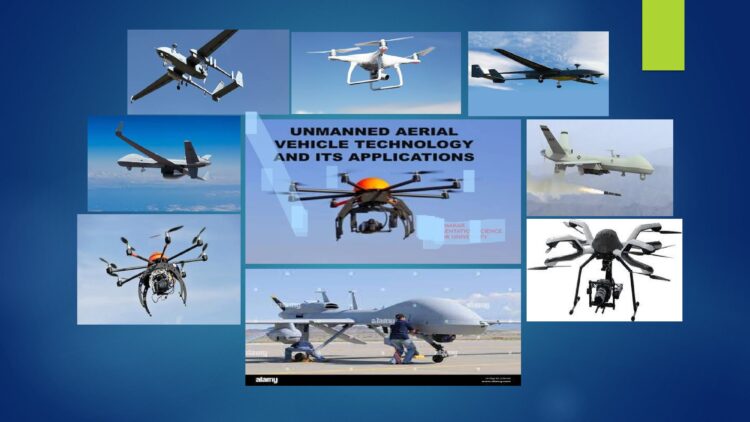
Now, let us re-examine the operational scenario of current times. The massive proliferation of drones has transformed the dynamics of the battlefield. The most essential game changer being the domain of responsibilities of ground forces who face threats from swarms of low-flying cheap kamikaze drones which have become the all-pervasive threats to the entire gamut of ground troops be it infantry, armour, artillery and logistics, communications and a vast array of war waging resources that would have littered the battlefield in the combat zone of the both the offensive and defensive formations. Further, the introduction of an array of drones supported by varying technologies and differing capabilities has made the ground forces highly vulnerable from the ‘Air Littoral’; the airspace directly above the ground forces up to a height of 10,000 feet. They would need differing weapon systems of differing ranges and differing technologies to neutralise them. This area has emerged as a serious threat to the ground forces in addition to the threats from the ground, which the forces are well organised and equipped to take on. Let us be assured that even if the Air Force fights its way to a limited air domination in the airspace above the ground operations, even then it would not be able to deter swarms of drones attacking the ground forces with impunity. The question emerges: who would take care of the threats emanating from Air Littoral?
Let us look at the OP-Sindoor, a phenomenal success; however, without the offensive ground forces crossing the borders, if it did, you would agree with me that the operational situation would have been different. I am not questioning the decision to freeze operations as the political aim was achieved, and it would be foolish to prolong the war like so many contemporary wars, which have catapulted into decades of confrontation, wrecking economies and livelihoods of millions, besides causing undue miseries. I am only referring to the success in OP Sindoor, should not serve as a template for fighting all future wars.
Now, coming back to the prevailing operational scenario, that is, a premium for the survival of ground forces, who will contend with threats from Air Littoral? How can any ground forces commander take thousands of troops into battle without having the wherewithal to deal with the imminent threats? Isn’t it his moral responsibility to have such weapon systems directly under him that would give him the basic means to protect his troops from threats emanating from the Littoral Airspace? Which commander would dare to command if the safety of his troops is outsourced, and expect loyalty from them? If his troops are being attacked and destroyed by swarms of drones from Littoral Airspace, should he not have the weaponry to destroy them and the power to use them? Or, should he wait for the Air Force to permit him to use the airspace while his troops are being battered by swarms of drones? It is unethical for any ground forces commander to take his troops to a Battle where he cannot guarantee them a reasonable survivability. It is not a negotiating factor as it adversely affects the trust between the commander and his troops.
At the same time, I have no doubts that our Air Force would deal with all the threats from SAMs, ASMs, Ballistic Missiles and direct air strikes by enemy fighters on the ground forces. I am only referring to swarms of drones attacking ground forces from the Air Littoral. The ‘First Person’s View’ (FPV) drones are guided by pilots who can see on their consoles what the drone sees in the air and can direct it not only to the target but also to the vulnerable part of the target, causing mayhem to the ground formations. Recently, I gave a talk on ground warfare to the Air Higher Command Course at the CAW. I was surprised at the interest they took in their ability to grasp the finer points of ground warfare. I have no doubts that such integrated training will go a long way in comprehending issues that confront a ground formation commander.
If we have a distant goal of theaterisation, we should iron out these minor irritants among the three services, as we aim to fight an integrated war to meet the combined threats from our adversaries. After the experience in Op Sindoor, we know how China was directly involved with Pakistan to fight us. Now that the gloves are off, let us not be fooled by the Chinese offer of olive branches. China is our enemy; so also is Pakistan, and any second thoughts that we will fight a single-front war are only illusory. Their combined offensive forces would be launched against us, and all our preparations and future conduct of war must work on this scenario. Therefore, it is in the interest of our country if all three services get together and iron out these irritants, such as the air defence of littoral air of both offensive and defensive ground forces in future wars.
On our way to theaterisation of the Armed Forces, the top brass of the three services needs to comprehend the complexities of other services. Interestingly, though the theme for the just concluded ‘Combined Commanders’ Conference’ was “Year of Reforms – Transforming for the Future;’ in the MOD Press Release dated 17 Sep 2025, there is not a word on Theaterisation. It appears that the Air Force has had its way, and the very concept has been thrown out of the window, lock, stock and barrel. Certainly, not an issue to feel happy about. Notwithstanding, I am sure the three services would respond and will find a solution to the threats emanating from Air Littoral on the Ground Forces. No time to be lost as wars emerge on distant skies unannounced.
Disclaimer :- Views expressed in this article are author’s own and does not represent the views of IIRF .