Indus Research
No Result
View All Result
Saturday, May 2, 2026
login
  • Home
  • About
    • Who We Are
    • Patrons
    • Governing Board
    • Advisors
    • Directors
    • Editorial Board
    • Support IIRF
  • Themes
    • International Relations & Security
      • Land Security
      • Maritime Security
      • Aerospace Security
      • Nuclear
      • Geopolitics
    • History
    • Military Doctrine & Strategy
      • Doctrines
      • Joint and Integrated Defence
      • Civil Military Relations
    • Science and Technology
      • Defence Technology
      • Industries and Society
      • Climate Change
      • Natural Resources
    • Economics and Commerce
      • Rare Earth
      • Maritime Economy
      • International Trade
    • Education
  • Focus Geographies
    • South Asian Connectivity & Cooperation
      • Afghanistan
      • Pakistan
      • Nepal
      • Bhutan
      • Bangladesh
      • Myanmar
      • Sri Lanka
      • Maldives
      • BIMSTEC
      • SAARC
      • SAGQ
      • BBIN
      • BRI
      • INSTC
      • IORA
      • MGC
      • IMT
    • Indo-Pacific
      • Indo-Pacific Economic Forum
      • QUAD
      • Oceania
      • IORA
      • Middle East
    • Indo-US Relations
    • Central Asia and Russia
  • Publications
    • Commentary
    • Issue Briefs
    • Research Paper
    • Monograph
    • Journal Articles
    • Books
    • Book reviews
    • Contributors
    • Submission Rules
    • IIRF Strategic Year Book – 2022-23
    • IIRF Strategic Yearbook – 2024
  • Membership
    • Membership Form
  • Indo-US Forum
  • Indian Knowledge System
    • Arts & Culture
    • Yoga & Health
    • Sanskrit Vedic Science Spirituality
  • IIRF Creativity Zone
  • Contact
  • Events & Media
    • IIRF EVENTS
    • US-India Business Connect 2025
    • WTC Utah’s India Trade Mission 2024 Gallery
    • Videos
  • language
    • Hindi
  • Home
  • About
    • Who We Are
    • Patrons
    • Governing Board
    • Advisors
    • Directors
    • Editorial Board
    • Support IIRF
  • Themes
    • International Relations & Security
      • Land Security
      • Maritime Security
      • Aerospace Security
      • Nuclear
      • Geopolitics
    • History
    • Military Doctrine & Strategy
      • Doctrines
      • Joint and Integrated Defence
      • Civil Military Relations
    • Science and Technology
      • Defence Technology
      • Industries and Society
      • Climate Change
      • Natural Resources
    • Economics and Commerce
      • Rare Earth
      • Maritime Economy
      • International Trade
    • Education
  • Focus Geographies
    • South Asian Connectivity & Cooperation
      • Afghanistan
      • Pakistan
      • Nepal
      • Bhutan
      • Bangladesh
      • Myanmar
      • Sri Lanka
      • Maldives
      • BIMSTEC
      • SAARC
      • SAGQ
      • BBIN
      • BRI
      • INSTC
      • IORA
      • MGC
      • IMT
    • Indo-Pacific
      • Indo-Pacific Economic Forum
      • QUAD
      • Oceania
      • IORA
      • Middle East
    • Indo-US Relations
    • Central Asia and Russia
  • Publications
    • Commentary
    • Issue Briefs
    • Research Paper
    • Monograph
    • Journal Articles
    • Books
    • Book reviews
    • Contributors
    • Submission Rules
    • IIRF Strategic Year Book – 2022-23
    • IIRF Strategic Yearbook – 2024
  • Membership
    • Membership Form
  • Indo-US Forum
  • Indian Knowledge System
    • Arts & Culture
    • Yoga & Health
    • Sanskrit Vedic Science Spirituality
  • IIRF Creativity Zone
  • Contact
  • Events & Media
    • IIRF EVENTS
    • US-India Business Connect 2025
    • WTC Utah’s India Trade Mission 2024 Gallery
    • Videos
  • language
    • Hindi
No Result
View All Result
Indus Research
No Result
View All Result
Home Commentary

Emerging Threats to India’s Energy Security: Drone Warfare, Cyber Attacks, and Geopolitical Risks – by Brigadier Hemant Mahajan

by Brig Hemant Mahajan
August 22, 2025
in Commentary, Economics and Commerce, Geopolitics, International Relations & Security, Military Doctrine & Strategy, Science and Technology
0
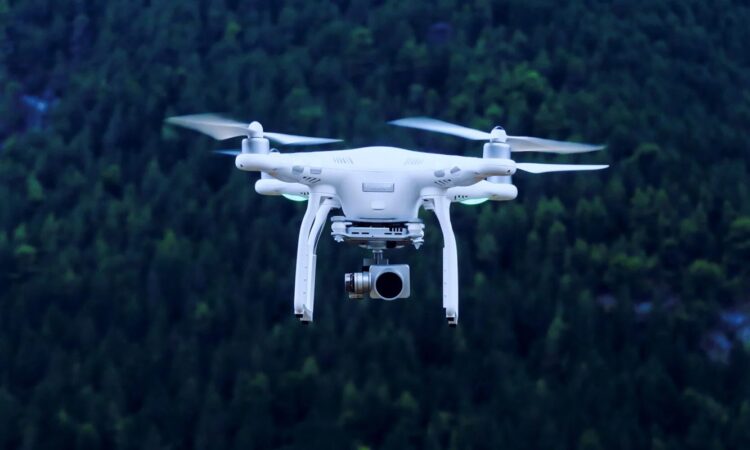
Russia-Ukraine War: Employment of Drones
Total
0
Shares
Share 0
Tweet 0
Share 0
Share 0
Share 0
Recent remarks by Pakistan’s Army Chief, General Asim Munir, threatening potential nuclear escalation and drone strikes on India’s largest refinery in Jamnagar, underscore the growing vulnerability of India’s strategic infrastructure.

India faces an unprecedented convergence of threats to its energy security arising from hostile neighbors, cyber warfare, and global geopolitical conflicts. Recent remarks by Pakistan’s Army Chief, General Asim Munir, threatening potential nuclear escalation and drone strikes on India’s largest refinery in Jamnagar, underscore the growing vulnerability of India’s strategic infrastructure.

The increasing use of drones in warfare (Russia–Ukraine conflict, West Asia conflicts), cyberattacks on energy infrastructure (Colonial Pipeline attack in the US, attacks on Indian grids), and strategic petroleum reserve inadequacies highlight India’s pressing need to redefine its energy security within a national defense framework.
Some vital Statistics –
  • 88% crude oil imports; 40% via Hormuz Strait.
  • SPR: 5.33 MT (9.5 days) vs IEA norm: 90 days.
  • 500+ drones intercepted in 2023 (10x growth since 2019).
  • 3.2 lakh cyberattacks on refineries in 2022.
  • 67% global energy firms hit by ransomware in 2024.
This article evaluates the threats, presents case studies and statistics, and outlines key policy recommendations for India’s future energy resilience.
1. Introduction
Energy security is no longer just an economic issue—it has become a national security imperative. India imports nearly 88% of its crude oil and 50% of its LNG, making its economy acutely vulnerable to supply chain disruptions, cyberattacks, and military strikes.
The threats are multi fold:
  1. Drone Warfare targeting refineries, pipelines, and ports.
  2. Cyber Warfare against refineries, power grids, and distribution networks.
  3. Geopolitical Conflicts threatening chokepoints like the Strait of Hormuz and Suez Canal.
  4. Domestic Security Breaches from Pakistan-sponsored drone smuggling and potential terror strikes.
2. Pakistan’s Threats to Indian Strategic Assets
Pakistan Army Chief General Asim Munir recently threatened nuclear escalation and potential drone/missile strikes on India’s Jamnagar Refinery (Reliance Industries), the world’s largest refinery with a processing capacity of 1.24 million barrels/day.
Pakistan has already been using drones extensively for:
Smuggling narcotics and arms across the Punjab border. Over 500 drones counted by BSF and Punjab Police in 2024 (many x increase since 2019).
If weaponized, such drones could target: Refineries, Airports, Data centers, Nuclear power plants, Urban Centers
Implication: Civilian and industrial hubs are within strike range, making anti-drone defense systems a necessity, not a luxury.
3. International Case Studies: Drone & Cyber Warfare
Drone Attacks on Energy Infrastructure
Russia–Ukraine War (2022–2025):
Monthly 1,000–1,500 drone strikes.
Targets: Power stations, rail hubs, fuel depots.
Billions in economic losses.
Saudi Arabia (2019):
Houthi rebels’ drone attack on Abqaiq and Khurais facilities disrupted 5% of global oil supply in one day.
Israel–Iran conflict:
Iran targeted Haifa Refinery; Israel hit South Pars Gas Field.
Iraq (July 2025):
Explosive drones hit 3 oil fields in Kurdistan.
Cyberattacks on Energy Infrastructure
Colonial Pipeline (US, 2021):
Ransomware halted 45% of East Coast fuel supply.
India (2020–2025):
Over 320,000 cyberattacks on Indian refineries in 2022.
66% of cyberattacks in April 2025 were on energy sector after Pahalgam terror incident. Chinese cyber groups targeted Mumbai and Ladakh power grids.
Statistical Insight Box
Global: 67% of energy firms faced ransomware in 2024 (Sophos Report).
India: 500+ drones intercepted (2023), 3.2 lakh refinery cyberattacks (2022).
4. India’s Energy Security Gaps
Overdependence on Imports 88% crude oil imports. 40% imports pass through Strait of Hormuz – a volatile chokepoint. Weak Strategic Petroleum Reserves (SPR)
Current capacity: 5.33 million tons (9.5 days) of net imports.
With PSU stocks: 74 days, still short of IEA’s 90-day standard.
Locations (Vizag, Mangalore, Padur) are coastal & vulnerable to missile attacks.
Inadequate Defense Integration
Operation Sindoor (May 2025) revealed:  600 drones/missiles intercepted, 40% targeting Gujarat & Rajasthan. Punjab border power shutdowns were needed to protect pipelines.
5. India’s Policy Response
Prime Minister Narendra Modi’s 15th August 2025 Announcement
Anti-Drone & Anti-Missile Shield across India by 2035.
Phase 1: Border regions, refineries, metros.
Phase 2: Nationwide multi-layered air defense.
Needed Strategic Shifts 
Decentralization: Micro-grids & renewable hubs in border regions.
Cyber Defense: AI-driven threat detection, Zero-Trust architecture, upgraded SCADA.
Resilient Storage: Expansion of SPR with inland facilities, private sector participation.
Military Integration: Permanent drone-defense, missile-shields, and armed patrols for energy hubs.
6. Policy Recommendations
Establish National Energy Security Council integrating defense, energy, and cyber agencies.
Increase SPR capacity to at least 90 days of net imports by 2030.
Deploy anti-drone systems at all refineries, LNG terminals, and nuclear plants.
Mandate cyber resilience audits for all PSU and private energy firms.
Promote domestic defense R&D for drone-jammers and hypersonic interceptors.
7. Conclusion
Drones, cyberattacks, and geopolitical tensions have transformed energy infrastructure into frontline battlefields. Pakistan’s threats, coupled with global precedents, demonstrate that India’s energy sector is not just an economic asset—it is a national security target.
A multi-layered defense approach—spanning air-defense, cyber-resilience, strategic reserves, and decentralized energy grids—is essential. With proactive policy implementation, India can not only secure its strategic energy hubs but also set a global benchmark in energy-security preparedness for the 21st century.
Acknoledgement and disclaimer :- This artice was first published in News Bharti. This is an author’s authorised reprint. Views expressed are author’s own , not that of IIRF .  

Total
0
Shares
Share 0
Tweet 0
Pin it 0
Share 0
Share 0

Leave a Reply Cancel reply

Your email address will not be published. Required fields are marked *

Recent Posts

BREAKING GLASS CEILING – Col Vijaykant Chenji (Retd)

BREAKING GLASS CEILING – Col Vijaykant Chenji (Retd)

April 21, 2026
Lessons For India: Learning From USA-Iran War – by Brigadier Hemant Mahajan (Retd)

Lessons For India: Learning From USA-Iran War – by Brigadier Hemant Mahajan (Retd)

April 21, 2026
WAR WITHOUT FRONTIERS : How Modern Conflict is Redefining Victory  – by Col Vijay Chenji (Retd)

WAR WITHOUT FRONTIERS : How Modern Conflict is Redefining Victory – by Col Vijay Chenji (Retd)

April 5, 2026
Naval Confrontation in the Strait of Hormuz: American Aircraft Carriers vs Iran’s ‘Choke-Point’ Strategy – by Brigadier Hemant Mahajan

Naval Confrontation in the Strait of Hormuz: American Aircraft Carriers vs Iran’s ‘Choke-Point’ Strategy – by Brigadier Hemant Mahajan

April 4, 2026
From NATO to a New Security Structure in Europe – By C.M.A.Nayar

From NATO to a New Security Structure in Europe – By C.M.A.Nayar

March 31, 2026
Trump’s endgame: Could Israel bear the brunt of Iran conflict? – by Lt Gen C.A. Krishnan (retd)

Trump’s endgame: Could Israel bear the brunt of Iran conflict? – by Lt Gen C.A. Krishnan (retd)

March 24, 2026

<strong>About IIRF</strong>

Indus International Research Foundation is a New Delhi based organisation with its overseas centre at USA . It is part of a global network of scholars, professionals and veterans based in India and abroad. The Foundation focuses primarily on international relations, Indian heritage, political economy and security studies. Led by experts with decades of international and domestic policy experience, IIRF India engages with governments, policymakers, academics, students, industries, practitioners, and civil society to provide insightful and fresh analysis of global trends and India’s challenging role as an emerging world leader. Foundation also runs special programs for veterans.

Office Addresses

Delhi NCR
F-511, Jalvayu Towers, Sector-47, Noida, Gautam Budh Nagar, UP, India – 201301
Email – contact@indusresearch.in
Mobile :- +91 8588021407

USA
India International Research Foundation, 2105 Long Park Avenue Prosper 75078, Dallas, Texas, USA Email – infousa@indusresearch.in

Bangalore
Indus International Research Foundation, Parkside Brigade Orchards, Devanhalli, Bangalore, Karnataka -562110

Explore IIRF

  • Links
  • International Relations & Security
  • History
  • Military Doctrine & Strategy
  • Science and Technology
  • Economics and Commerce
  • Education
  • IIRF Creativity Zone
  • Membership
  • Support IIRF

© 2022 Indus Research

No Result
View All Result
  • Home
  • About
    • Who We Are
    • Patrons
    • Governing Board
    • Advisors
    • Directors
    • Editorial Board
    • Support IIRF
  • Themes
    • International Relations & Security
      • Land Security
      • Maritime Security
      • Aerospace Security
      • Nuclear
      • Geopolitics
    • History
    • Military Doctrine & Strategy
      • Doctrines
      • Joint and Integrated Defence
      • Civil Military Relations
    • Science and Technology
      • Defence Technology
      • Industries and Society
      • Climate Change
      • Natural Resources
    • Economics and Commerce
      • Rare Earth
      • Maritime Economy
      • International Trade
    • Education
  • Focus Geographies
    • South Asian Connectivity & Cooperation
      • Afghanistan
      • Pakistan
      • Nepal
      • Bhutan
      • Bangladesh
      • Myanmar
      • Sri Lanka
      • Maldives
      • BIMSTEC
      • SAARC
      • SAGQ
      • BBIN
      • BRI
      • INSTC
      • IORA
      • MGC
      • IMT
    • Indo-Pacific
      • Indo-Pacific Economic Forum
      • QUAD
      • Oceania
      • IORA
      • Middle East
    • Indo-US Relations
    • Central Asia and Russia
  • Publications
    • Commentary
    • Issue Briefs
    • Research Paper
    • Monograph
    • Journal Articles
    • Books
    • Book reviews
    • Contributors
    • Submission Rules
    • IIRF Strategic Year Book – 2022-23
    • IIRF Strategic Yearbook – 2024
  • Membership
    • Membership Form
  • Indo-US Forum
  • Indian Knowledge System
    • Arts & Culture
    • Yoga & Health
    • Sanskrit Vedic Science Spirituality
  • IIRF Creativity Zone
  • Contact
  • Events & Media
    • IIRF EVENTS
    • US-India Business Connect 2025
    • WTC Utah’s India Trade Mission 2024 Gallery
    • Videos
  • language
    • Hindi

© 2022 Indus Research