Synopsis : As a direct consequence of unfettered application of globalization, relocation of manufacturing activities to low cost countries and massive import of cheap goods, USA fell into the trap of mounting trade deficits year after year . Although President Trump had recognized the need to bring manufacturing back to USA during his first term itself , there was not much progress. He put the subject on top priority during his second term . President Trump considered that imposing high level of tariffs could be a way to slow down import and to stimulate local production . Sadly , it is not happening . On the contrary , the total import in 2025 went up by 4.6 % in comparison to 2024 and the trend during the first 5 months show that the total in 2026 could be higher than in 2025. While it is true that total import from China to USA is coming down , China’s over all exports had gone up by over 4 % in 2025. US Supreme court’s decision in February 2026 made it clear that the President of USA has no powers to impose tariffs arbitrarily and President Trump decided to apply section 301 of US trade Act 1974 for imposing tariffs on import from a large number of countries . Accordingly , US Trade Representative Jamieson Greer announced that he is planning to apply Section 301 on 60 countries covering 99 % of import from these countries . The list includes several EU members and Japan . In fact , labour laws are much more stringent in most of these countries in comparison to USA. President Trump has issued an Executive Order on the matter . In my view , imposition of Section 301 is not likely to bring down the total import of goods to USA in 2026 or even in 2027. The only way for USA to reduce total import is to create a new awareness among citizens to abandon the” throw away culture” of consuming cheap imported goods and adopt a new pattern of consuming less quantity of more expensive locally made goods . This will keep the family budget unaffected. The slogan could be “ consume less but consume better “
1.Introduction
Free market approach with an unbridled adoption of globalization has resulted in large scale shifting of manufacturing activities from USA to other countries particularly China. This has also resulted in economic deficit ( trade deficit and loss of GDP ) , technical deficit ( loss of knowhow acquired from shop-floors ) and social deficit ( unemployment ) . While it is true that Corporate America made huge profits through cheap production of goods outside USA and the citizens got benefited because of cheap import of goods , the nation suffered multiple deficits . President Trump’s slogan “ Make America Great again “ by “ Bringing manufacturing back to USA” had the noble objective of stimulating the US economy through local production . Sadly , it did not happen for multiple reasons . A desperate President wanted to boost local production by making import costlier through the imposition of tariff. Sadly , it is also not working .
- US Trade Representative Jamieson Greer’s statement
US trade representative Jamieson Greer has made the following statement a few days ago
“US has laws to prohibit trading goods with “ forced labour “ . Other countries most don’t have those laws. Those that do don’t really enforce it . The proposed 301 tariffs on 60 countries would cover about 99 % of US trade”
US Trade Representative is referring to the proposal to impose trade restrictions on other countries based on Section 301 of the US trade Act 1974 . Section 301 was used against Japan by President Reagan , against EU by President Clinton and President George Bush Jr, against China by President Obama and President Trump ( during first term ) . There was no public debate on the matter on such occasions. In my view, US is at liberty to import goods of its choice from countries of its choice without attributing any reasons whatsoever . US has also the powers to impose tariffs of its choice as long as it can circumvent WTO rules in the name of national security . There is no reason to invoke section 301 . While US President is perfectly within his powers to use section 301 against any country which uses unfair trade practices , massive use of it against large number of countries will certainly draw criticism and perhaps even court-scrutiny.
Now let us come to the contents of what Mr.Greer said . Almost all the democracies in the world have laws preventing forced labour . It is possible that some of these countries may not be following these laws strictly . Let us take the case of USA itself . The Immigration Reform and control Act ( IRCA )1986 prohibits employment of illegal immigrants within USA. As per PEW report , there are around 11 million immigrants living in USA and around 8.5 million of these illegal immigrants are employed by different organizations and individuals . Will they not come under the scope of forced labour because they have practically no rights? . A good percentage of these illegal immigrants pay “payroll tax” using ITIN without having a social security number ( SSN ) . US has to sort out this major issue before pointing fingers on other countries . Internal issues between US administration and the US courts will have to be sorted out suitably without dragging other nations into it .
- Stimulating US economy through local production
Larger issue is whether USA will be able to reduce overall imports by such actions and stimulate US economy through local production . Past experience shows that US is not likely to succeed in reducing overall import through tariff barriers due to multiple practical constraints . Reckless adoption of globalization in the name of free market economy and large scale relocation of manufacturing activities in low cost countries have caused structural deficits like economic deficit , social deficit and technical deficit in USA. There is a need to address these issues by “ bringing manufacture back to USA “ as promised by President Trump . Locally made products replacing cheap imported products could be more expensive affecting family budget . Will the US citizens rise to the occasion by consuming less of more expensive local products for balancing the family budget? . This will be possible only if the Americans abandon the “ throw away culture “ and develop a new consumption pattern for promoting local products . We have to wait and see.
- President Trump’s tariff strategy
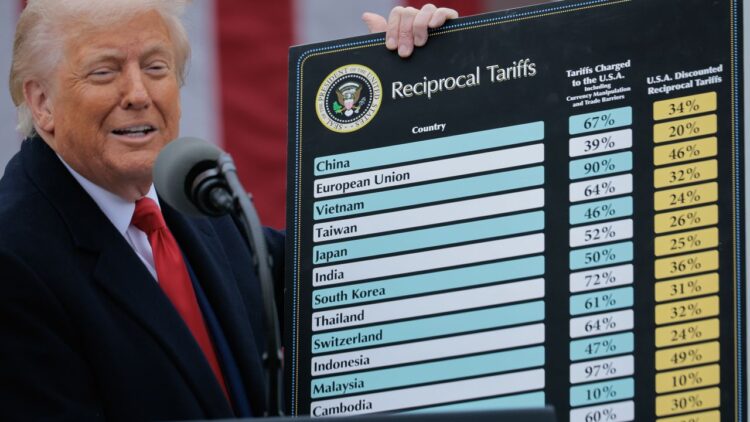
President Trump launched his saga of tariff on 2nd April 2025 with what is called the “liberation day announcement” for charging the trading partners with tariffs up to 50% using the International Emergency Economic Powers Act( IEEPA ) which authorizes the president to use the law “to deal with any unusual and extraordinary threat, which has its source in whole or substantial part outside the United States, to the national security, foreign policy, or economy of the United States. After ten months of multiple announcements on tariffs from the Administration , the Supreme Court blocked the action declaring that the President does not have such powers . This does not prevent US administration to impose tariff on imported goods as part of its trade policy as most of the nations are doing . Instead . President trump decided to use section 301 of the US trade Act 1974. The legal validity of such an action could also be put to question by courts .
- Mounting US imports and trade deficit year after year
Let us now see the impact of tariffs on US imports during the last two years and impact of such tariffs on the overall export of some of the countries punished by USA through tariffs.
US trade 2023 to 2026 ( 5 months ) . Figures in Billion $
| Year | Export | Import | Deficit | Remarks |
| 2023 | 2022 | 3076 | 1054 | |
| 2024 | 2063 | 3263 | 1200 | Increase in import |
| 2025 | 2180 | 3414 | 1234 | Increase in import |
| 2026 ( 5 months) | 1030 | 1428 | 398 | Increase in import |
| Source : https://www.census.gov/foreign-trade/balance/c0015.html | ||||
Note : In spite of multiple actions initiated by Trump administration for increasing the import-duty substantially , the overall import of goods by USA has been increasing putting in evidence that such increases in import-duty is not really effective . The trend from 2023 onwards show that the total import is bound to increase in 2026 in comparison to 2025. A critical analysis for such a situation may provide shocking revelations : Prohibitively high cost of production in USA ,loss of know how on account of indiscriminate globalization , corporate greed for maximizing profit to the detriment of national interest , lack of national pride for consuming locally made products even if the prices are high ( lack of purchasing power could be a reason ) etc .
US imports from selected countries
| China | EU | India | Russia | |
| 2023 | 427 | 576 | 83 | 4.5 |
| 2024 | 440 | 606 | 87 | 3 |
| 2025 | 308 | 632 | 103 | 3.7 |
| 2026 ( 5 months) | 104 | 222 | 40 | 1.5 |
| Source : https://www.census.gov/foreign-trade/data/index.html | ||||
Note :
- There was a reduction of 30 % in import from China between 2024 and 2025 and the import is likely to go down by another 20 % in 2026.
- There was an increase of around 4 % in import from EU between 2024 and 2025 and it is expected to come down by 16 % in 2016
- There was an increase of around 18 % in import from India between 2024 and 2025 and it is expected to come down by 7 % in 2026.
- There was an increase of around 23 % in import from Russia between 2024 and 2025 and there may not be any change in 2026. Is it not strange that USA continues to buy uranium , inorganic chemicals , fertilizers , oil seeds and even wood from Russia while imposing sanction on other nations for buying oil from Russia ? .
- Conclusion
6.1. USA was a net exporter of goods till 1975 and liberalization of trade policies launched by President Regan open a floodgate for cheap imports with trade deficits increasing year after year . Entry of China into WTO and massive impact of globalization made USA an import-dependent nation and it is not able to find a way to come out of this dangerous situation
6.2. President Trump had recognized the need for bringing manufacturing back to USA during his first term . However , he could not make much progress.
6.3. President Trump made “ bringing manufacture back to USA” as his top priority during his second term. President considered that imposition of high levels of import duty will help him to achieve his objective . This has not worked so far . Intervention of the Supreme Court made the task more difficult .
6.4. In a desperate move , President Trump has issued an Executive order to impose Section 301 of US Trade Act 1974 ( forced labour ) for charging tariff on imports from 60 countries . In my view , this is also not likely to succeed.
6.5. In my view the only way for US to succeed for bringing down total import of goods will to create a new awareness among citizens to abandon the “ throw away cuklture” of consuming cheap imported goods and move towards a new consumption pattern of consuming less of more expense locally made products with a slogan “ consume less but consume better “. This would need a national consensus .
C.M.A.Nayar
26th July 2026. Trivandrum , Kerala . India