Introduction
In a landmark decision, the Defence Acquisition Council (DAC), chaired by Defence Minister Rajnath Singh, approved capital acquisition proposals worth approximately Rs 52,000 crore. The approvals focus heavily on drone warfare, anti-drone systems, precision strike capabilities, and indigenous defence manufacturing.
This decision represents far more than a routine procurement exercise. It signals India’s determination to prepare its armed forces for the battlefields of the future while simultaneously strengthening domestic defence production under the “Make in India” initiative.
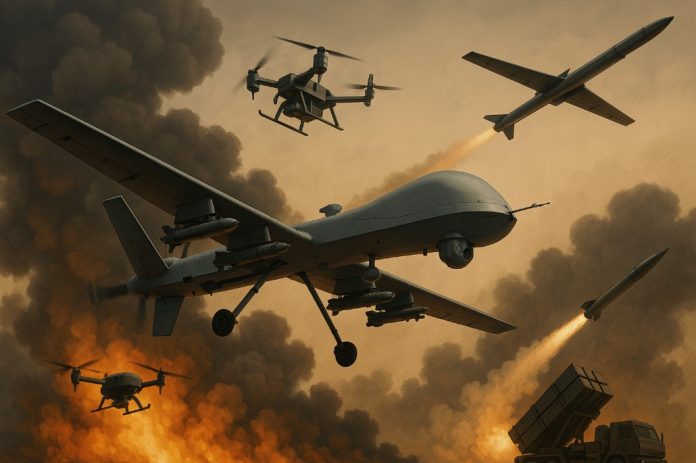
The character of warfare is undergoing a dramatic transformation. The age when military power was measured primarily by the number of tanks, fighter aircraft, artillery guns, and warships is rapidly giving way to an era dominated by artificial intelligence, drones, autonomous weapons, electronic warfare, and network-centric operations.
Recent conflicts across the globe, particularly the Russia-Ukraine war, have demonstrated that relatively inexpensive unmanned systems can inflict disproportionate damage on technologically advanced militaries.
Recognizing these changing realities, India has embarked upon a major military modernization drive under the vision of Atmanirbhar Bharat (Self-Reliant India).
The Changing Nature of Warfare
Military history shows that every major technological innovation changes battlefield dynamics. Gunpowder revolutionized warfare in the medieval era. Tanks and aircraft transformed combat during the World Wars. Nuclear weapons altered global strategic calculations after 1945.
Today, drones and autonomous systems are emerging as the next revolutionary military technology.
The Russia-Ukraine conflict has demonstrated how low-cost drones can destroy tanks worth millions of dollars. Commercially modified quadcopters, loitering munitions, and kamikaze drones have become indispensable components of modern military operations. These systems provide surveillance, intelligence gathering, target acquisition, artillery correction, and precision strike capabilities at a fraction of the cost of traditional weapons.
The lessons from this conflict have been carefully studied by military planners worldwide, including India. The latest DAC approvals indicate that India is incorporating these lessons into its defence preparedness strategy.
India’s Security Challenges Demand Modern Solutions
India faces unique security challenges.
On the northern borders, India confronts an increasingly assertive China, which has invested heavily in drone technologies, artificial intelligence, electronic warfare, and autonomous combat systems.
On the western front, Pakistan has frequently used drones for surveillance, arms smuggling, and narcotics trafficking across the border. Several incidents in Punjab and Jammu and Kashmir have highlighted the growing drone threat emanating from across the border.
Additionally, India must safeguard its extensive coastline, island territories, strategic installations, military bases, ammunition depots, oil refineries, and critical infrastructure from emerging aerial threats.
Traditional air defence systems designed to intercept fighter aircraft and missiles are often ineffective or economically impractical against swarms of small, low-cost drones. Therefore, India requires specialized anti-drone solutions capable of detecting and neutralizing these threats.
AKASH TARANG: India’s New Anti-Drone Shield
One of the most significant approvals by the Defence Acquisition Council is the procurement of the AKASH TARANG Anti-Unmanned Aerial Vehicle (UAV) Electronic Warfare System.
This advanced system has been designed specifically to detect, identify, track, jam, and neutralize hostile drones and unmanned aerial systems.
Why AKASH TARANG is Important
Modern drones present several challenges:
- They can fly at low altitudes.
- They possess a small radar signature.
- They are relatively inexpensive.
- They can be deployed in large numbers.
- They can carry explosives, surveillance equipment, or electronic warfare payloads.
AKASH TARANG addresses these challenges through sophisticated sensors and electronic warfare technologies.
The system will enable the Indian Army to:
- Detect incoming drones at significant distances.
- Disrupt communication links between drones and their operators.
- Jam navigation systems.
- Neutralize hostile UAVs before they reach critical targets.
- Protect military formations and strategic infrastructure.
The induction of AKASH TARANG significantly strengthens India’s layered air defence architecture and represents an important step toward safeguarding military assets against emerging aerial threats.
Kamikaze Drones: A New Offensive Capability
The DAC has also approved the procurement of jet-based kamikaze drones, signaling a major shift in India’s offensive military capabilities.
What Are Kamikaze Drones?
Kamikaze drones, also known as loitering munitions, combine the characteristics of missiles and drones.
Unlike conventional drones that return after completing a mission, kamikaze drones are designed to:
- Loiter over a target area.
- Search for targets autonomously.
- Identify and track enemy assets.
- Dive onto targets and destroy them through self-detonation.
These systems provide exceptional flexibility to military commanders.
Advantages of Kamikaze Drones
Kamikaze drones offer several operational advantages:
Precision Strikes
They can accurately engage high-value targets such as:
- Enemy command centers
- Radar installations
- Air defence systems
- Artillery positions
- Ammunition depots
Reduced Risk to Soldiers
The use of unmanned systems minimizes exposure of soldiers and pilots to enemy fire.
Cost Effectiveness
They are significantly cheaper than employing fighter aircraft or expensive missile systems for many missions.
Deep Penetration Capability
These drones can penetrate enemy territory and strike targets beyond the immediate battlefield.
The acquisition of jet-based kamikaze drones places India among the growing group of militaries embracing autonomous offensive capabilities.
Learning from the Russia-Ukraine War
The Russia-Ukraine conflict has become one of the most studied wars in modern military history.
Several key lessons have emerged:
Drones Have Become Battlefield Multipliers
Both Russia and Ukraine have used drones extensively for:
- Reconnaissance
- Artillery targeting
- Precision attacks
- Psychological warfare
Electronic Warfare is Critical
Success often depends not only on possessing drones but also on the ability to:
- Jam enemy communications
- Disrupt navigation systems
- Protect friendly networks
Swarm Attacks Can Overwhelm Defences
Large numbers of inexpensive drones can saturate even sophisticated air defence systems.
Autonomous Systems Increase Combat Effectiveness
Artificial intelligence and autonomous technologies are increasingly influencing battlefield outcomes.
India’s recent procurement decisions clearly reflect these lessons and demonstrate a proactive effort to avoid technological surprise in future conflicts.
Strengthening Battlefield Firepower
The Rs 52,000 crore package extends beyond drone warfare and includes several critical weapon systems for the Indian Army.
Man Portable Anti-Tank Guided Missiles (MPATGM)
These indigenous anti-tank missiles provide infantry units with the ability to destroy enemy armored vehicles and tanks with high precision.
Benefits include:
- Enhanced infantry firepower
- Improved anti-armor capability
- Greater tactical flexibility
- Reduced dependence on imported systems
Very Short Range Air Defence Systems (V-SHORADS)
V-SHORADS are designed to engage:
- Low-flying aircraft
- Helicopters
- Drones
- Cruise missiles
These systems are essential for protecting frontline troops and critical military assets against aerial threats.
Their induction strengthens India’s multi-layered air defence network and improves battlefield survivability.
Active Protection Systems for Tanks
Modern anti-tank missiles have become increasingly lethal.
Active Protection Systems (APS) provide tanks with the capability to:
- Detect incoming missiles.
- Track threats automatically.
- Neutralize hostile projectiles before impact.
The integration of APS significantly enhances the survivability of India’s armored formations in high-intensity combat scenarios.
Strengthening the Indian Navy with Advanced Unmanned Systems
The Indian Navy is also set to benefit from the latest acquisition package.
The DAC has approved procurement of Naval Shipborne Unmanned Aerial Systems (NSUAS) equipped with advanced sensors.
Importance of NSUAS
The Indian Ocean Region is becoming increasingly contested due to:
- China’s expanding naval presence.
- Strategic maritime trade routes.
- Energy security concerns.
- Regional geopolitical competition.
NSUAS will provide:
- Enhanced maritime surveillance.
- Improved intelligence gathering.
- Better situational awareness.
- Real-time target tracking.
- Greater operational reach for naval task forces.
These capabilities are particularly important for monitoring activities in the Indian Ocean and protecting India’s maritime interests.
Atmanirbhar Bharat and Defence Self-Reliance
One of the most important aspects of the DAC approvals is their alignment with the government’s Atmanirbhar Bharat vision.
For decades, India remained one of the world’s largest importers of defence equipment. This dependence created vulnerabilities in times of crisis and imposed significant financial burdens.
The government has therefore pursued a strategy aimed at:
- Promoting indigenous research and development.
- Encouraging private sector participation.
- Strengthening defence public sector undertakings.
- Increasing domestic manufacturing.
The latest acquisitions are expected to involve major Indian defence companies including:
- Bharat Electronics Limited
- Bharat Dynamics Limited
- Adani Defence & Aerospace
This approach not only strengthens national security but also generates employment, promotes technological innovation, and enhances India’s defence export potential.
Strategic Benefits for India
The modernization initiatives approved by the DAC provide multiple strategic advantages.
Enhanced Deterrence
Advanced drone and anti-drone capabilities strengthen India’s deterrence posture against both conventional and hybrid threats.
Greater Operational Flexibility
Commanders gain access to a wider range of options for surveillance, precision strikes, and force protection.
Reduced Import Dependence
Domestic manufacturing decreases vulnerability to foreign supply chain disruptions and geopolitical pressures.
Improved Technological Edge
Investment in cutting-edge technologies ensures that India remains competitive in future warfare domains.
Support for Defence Exports
As indigenous systems mature, India can expand defence exports to friendly nations, enhancing both economic growth and strategic influence.
Challenges Ahead
While the approvals represent a major step forward, several challenges remain.
India must ensure:
- Rapid induction of approved systems.
- Continuous technological upgrades.
- Integration of artificial intelligence and machine learning.
- Development of counter-swarm technologies.
- Robust cybersecurity frameworks.
- Effective jointness among the Army, Navy, and Air Force.
Additionally, future wars may involve thousands of autonomous systems operating simultaneously. Therefore, investments in indigenous research and development must remain a national priority.
Conclusion
The Defence Acquisition Council’s approval of Rs 52,000 crore worth of military acquisitions marks a significant milestone in India’s defence modernization journey. The induction of AKASH TARANG anti-drone systems, jet-based kamikaze drones, MPATGMs, V-SHORADS, active protection systems, and advanced naval unmanned platforms demonstrates that India is preparing for the realities of twenty-first-century warfare.
More importantly, these acquisitions reflect the success of the Atmanirbhar Bharat vision in defence. India is no longer merely purchasing weapons; it is building an indigenous military-industrial ecosystem capable of developing, producing, and sustaining advanced defence technologies.
As warfare increasingly shifts toward drones, artificial intelligence, electronic warfare, and autonomous systems, India’s latest decisions position the Indian Armed Forces to meet future challenges with greater confidence, technological superiority, and strategic self-reliance. The message is clear: India intends not only to defend its borders but also to emerge as a leading military and technological power in the evolving global security landscape.