Indus Research
No Result
View All Result
Tuesday, July 28, 2026
login
  • Home
  • About
    • Who We Are
    • Patrons
    • Governing Board
    • Advisors
    • Directors
    • Editorial Board
    • Support IIRF
  • Themes
    • International Relations & Security
      • Land Security
      • Maritime Security
      • Aerospace Security
      • Nuclear
      • Geopolitics
    • History
    • Military Doctrine & Strategy
      • Doctrines
      • Joint and Integrated Defence
      • Civil Military Relations
    • Science and Technology
      • Defence Technology
      • Industries and Society
      • Climate Change
      • Natural Resources
    • Economics and Commerce
      • Rare Earth
      • Maritime Economy
      • International Trade
    • Education
  • Focus Geographies
    • South Asian Connectivity & Cooperation
      • Afghanistan
      • Pakistan
      • Nepal
      • Bhutan
      • Bangladesh
      • Myanmar
      • Sri Lanka
      • Maldives
      • BIMSTEC
      • SAARC
      • SAGQ
      • BBIN
      • BRI
      • INSTC
      • IORA
      • MGC
      • IMT
    • Indo-Pacific
      • Indo-Pacific Economic Forum
      • QUAD
      • Oceania
      • IORA
      • Middle East
    • Indo-US Relations
    • Central Asia and Russia
  • Publications
    • Commentary
    • Issue Briefs
    • Research Paper
    • Monograph
    • Journal Articles
    • Books
    • Book reviews
    • Contributors
    • Submission Rules
    • IIRF Strategic Year Book – 2022-23
    • IIRF Strategic Yearbook – 2024
  • Membership
    • Membership Form
  • Indo-US Forum
  • Indian Knowledge System
    • Arts & Culture
    • Yoga & Health
    • Sanskrit Vedic Science Spirituality
  • IIRF Creativity Zone
  • Contact
  • Events & Media
    • IIRF EVENTS
    • US-India Business Connect 2025
    • WTC Utah’s India Trade Mission 2024 Gallery
    • Videos
  • language
    • Hindi
  • Home
  • About
    • Who We Are
    • Patrons
    • Governing Board
    • Advisors
    • Directors
    • Editorial Board
    • Support IIRF
  • Themes
    • International Relations & Security
      • Land Security
      • Maritime Security
      • Aerospace Security
      • Nuclear
      • Geopolitics
    • History
    • Military Doctrine & Strategy
      • Doctrines
      • Joint and Integrated Defence
      • Civil Military Relations
    • Science and Technology
      • Defence Technology
      • Industries and Society
      • Climate Change
      • Natural Resources
    • Economics and Commerce
      • Rare Earth
      • Maritime Economy
      • International Trade
    • Education
  • Focus Geographies
    • South Asian Connectivity & Cooperation
      • Afghanistan
      • Pakistan
      • Nepal
      • Bhutan
      • Bangladesh
      • Myanmar
      • Sri Lanka
      • Maldives
      • BIMSTEC
      • SAARC
      • SAGQ
      • BBIN
      • BRI
      • INSTC
      • IORA
      • MGC
      • IMT
    • Indo-Pacific
      • Indo-Pacific Economic Forum
      • QUAD
      • Oceania
      • IORA
      • Middle East
    • Indo-US Relations
    • Central Asia and Russia
  • Publications
    • Commentary
    • Issue Briefs
    • Research Paper
    • Monograph
    • Journal Articles
    • Books
    • Book reviews
    • Contributors
    • Submission Rules
    • IIRF Strategic Year Book – 2022-23
    • IIRF Strategic Yearbook – 2024
  • Membership
    • Membership Form
  • Indo-US Forum
  • Indian Knowledge System
    • Arts & Culture
    • Yoga & Health
    • Sanskrit Vedic Science Spirituality
  • IIRF Creativity Zone
  • Contact
  • Events & Media
    • IIRF EVENTS
    • US-India Business Connect 2025
    • WTC Utah’s India Trade Mission 2024 Gallery
    • Videos
  • language
    • Hindi
No Result
View All Result
Indus Research
No Result
View All Result
Home Commentary

Honouring the Spirit of Courage, Sacrifice, and Patriotism Remembering Operation Kargil Vijay: Innovative use of Air Power by the Indian Air Force to Turn the Tide in Kargil – by Air Marshal VPS Rana (Retd)

by Air Marshal VPS Rana
July 27, 2026
in Commentary, HISTORY, Military Doctrine & Strategy
0
Honouring the Spirit of Courage, Sacrifice, and Patriotism Remembering Operation Kargil Vijay: Innovative use of Air Power by the Indian Air Force to Turn the Tide in Kargil – by Air Marshal VPS Rana (Retd)
Total
0
Shares
Share 0
Tweet 0
Share 0
Share 0
Share 0

Kargil Vijay Diwas is observed on July 26th every year. This date marks the day in 1999 when the Indian Army successfully recaptured all the positions held by the Pakistani infiltrators. The victory was a significant milestone in Indian military history, showcasing the raw courage, strength, determination and professional acumen of the armed forces. The day is a reminder of the sacrifices made by the soldiers to safeguard the nation. It also serves as an occasion to reflect on the importance of national security and the need to remain vigilant against external threats.
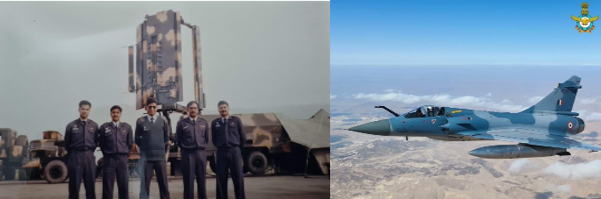
The Author During Op Kargil as CO of a Unit.                                      Mirage 2000-The Game Changer

The story of Operation Kargil Vijay goes beyond military victory; it is a lasting tale of bravery, sacrifice, leadership, and national determination. Enemy forces had seized key strategic heights above Dras, Batalik, and Kaksar, establishing fortified mountain outposts overlooking crucial communication routes. They had dug bunkers into bare rock, arming them with machine guns, mortars, and ammunition before the snows receded. The enemy also possessed numerous shoulder-fired stinger missiles on each hilltop. Reclaiming these positions required attacking steep, barren slopes under constant enemy observation and heavy fire.

In such terrain, the IAF brought a decisive advantage: the ability to strike with speed, reach and precision where ground movement was slow, costly and exposed. Conventional military wisdom had long treated high-altitude mountain warfare as a domain where air power could


only play a limited role. Yet, the IAF proved otherwise. The aircraft, equipment and weapons were not meant for those heights, and no Air Force in the world had fought war at those altitudes over the mountains. Flying in thin mountain air, through narrow valleys and under the threat of enemy fire, the IAF transformed the course of the war and helped turn the tide in India’s favour through prompt modification of equipment and weapons and innovative delivery tactics to ensure that the weapon load was delivered with precision to destroy well-fortified targets of the enemy. By limiting military operations to the Indian side of the LoC, India reinforced its moral and diplomatic standing before the international community while demonstrating confidence in the capabilities of its armed forces. Within those carefully defined limits, the IAF operated with exceptional professionalism, ensuring that every sortie served the larger national aim of restoring the sanctity of the LoC.

The IAF was called for operations almost a month after ground operations had commenced and called this operation ‘Operation Safed Sagar’. Having lost two fighter aircraft and a helicopter in the beginning, and the loss of a few brave aircrew, besides the capture of Flight Lieutenant Nachiketa by Pakistan, IAF personnel displayed extraordinary personal courage. Young pilots continued to fly low-level missions through treacherous mountain corridors, often with little room for error and even less margin for survival. MiG-21s, MiG-27s and Mirage 2000s roared into the high Himalayas, while helicopter crews in Mi-17s, Cheetahs and Chetaks braved hostile fire to deliver supplies, evacuate casualties and sustain isolated troops. And it was not only in the air, but on the ground as well; the IAF professionals manned command and control centres, airfields, radars and missile squadrons round the clock to ensure safe operations and were ever vigilant for any further escalation into full-fledged war. The shift from early, risky attacks to carefully planned precision strikes reflected the IAF’s ability to quickly learn, adapt and dominate. The use of Mirage 2000 with laser-guided bombs for the first time against key enemy positions, including heavily fortified heights such as Tiger Hill and Muntho Dhalo, became war-changing moments that shattered enemy confidence and opened the way for ground forces to advance.

In the operations rooms, on the airfields and at the forward air control points, identities merged into a singular purpose. Pilots depended on ground troops to mark targets and secure ridgelines; soldiers depended on aircrew to deliver firepower, supplies and evacuation when the mountains offered no mercy. Fighter controllers guided the missions and provided the surveillance to keep the aircraft safe from the enemy; maintenance crews worked through the night to keep aircraft serviceable, while other personnel and mission planners ensured that every sortie was launched


with purpose. The IAF played a significant role by shaping the battlefield. Its strikes disrupted enemy logistics, destroyed bunkers, suppressed firing positions and forced the adversary to abandon the illusion that the heights were impregnable. Air power, employed with restraint, precision and imagination, became a decisive instrument of national will. The war proved that air power, when used with clarity of purpose and operational finesse, can change the course of a conflict without losing sight of restraint and responsibility. As per the MoD statement, the IAF flew around 5,000 strike missions, 350 reconnaissance/Electronic Intelligence (ELINT) missions, and around 800 escort missions, besides over 2,000 helicopter sorties towards casualty evacuation and air transport operations. The attacks initially by conventional dumb bombs and later with LGB by the Mirage-2000 had telling effects on enemy positions.

Now, even after 27 years, the snow-clad peaks of Kargil continue to echo with stories of bravery, patriotism and sacrifice. The operation stands as a shining example of strategic foresight, tactical brilliance and indomitable spirit. Above all, it remains a tribute to the armed forces who proved that courage is not the absence of fear, but the triumph of duty over fear, and that the strongest bonds forged in war are those of honour, trust and brotherhood.

Total
0
Shares
Share 0
Tweet 0
Pin it 0
Share 0
Share 0

Leave a Reply Cancel reply

Your email address will not be published. Required fields are marked *

Recent Posts

Honouring the Spirit of Courage, Sacrifice, and Patriotism Remembering Operation Kargil Vijay: Innovative use of Air Power by the Indian Air Force to Turn the Tide in Kargil – by Air Marshal VPS Rana (Retd)

Honouring the Spirit of Courage, Sacrifice, and Patriotism Remembering Operation Kargil Vijay: Innovative use of Air Power by the Indian Air Force to Turn the Tide in Kargil – by Air Marshal VPS Rana (Retd)

July 27, 2026
President Trump and tariff dilemma – By C.M.A.Nayar

President Trump and tariff dilemma – By C.M.A.Nayar

July 27, 2026
Bangladesh’s instability has sharpened India’s ‘Chicken Neck’ challenge – by Vice Admiral Shekhar Sinha (Retd)

Bangladesh’s instability has sharpened India’s ‘Chicken Neck’ challenge – by Vice Admiral Shekhar Sinha (Retd)

July 24, 2026
ISRO’s Talent Exodus: Brain Drain, Brain Gain,  or Brain Circulation  and India’s Quest for Space Power – by Brigadier Hemant Mahajan (Retd)

ISRO’s Talent Exodus: Brain Drain, Brain Gain,  or Brain Circulation and India’s Quest for Space Power – by Brigadier Hemant Mahajan (Retd)

July 23, 2026
The Strategic Importance Of Pakistan’s Gwadar Port For China –  By Commodore Venugopal Menon (Retd)

The Strategic Importance Of Pakistan’s Gwadar Port For China – By Commodore Venugopal Menon (Retd)

July 15, 2026
Indian Armed Forces Defence Preparedness through Atmanirbhar Bharat:  India’s Big Leap into Drone Warfare and Future Battlefields – by Brigadier Hemant Mahajan (Retd)

Indian Armed Forces Defence Preparedness through Atmanirbhar Bharat: India’s Big Leap into Drone Warfare and Future Battlefields – by Brigadier Hemant Mahajan (Retd)

July 5, 2026

<strong>About IIRF</strong>

Indus International Research Foundation is a New Delhi based organisation with its overseas centre at USA . It is part of a global network of scholars, professionals and veterans based in India and abroad. The Foundation focuses primarily on international relations, Indian heritage, political economy and security studies. Led by experts with decades of international and domestic policy experience, IIRF India engages with governments, policymakers, academics, students, industries, practitioners, and civil society to provide insightful and fresh analysis of global trends and India’s challenging role as an emerging world leader. Foundation also runs special programs for veterans.

Office Addresses

Delhi NCR
F-511, Jalvayu Towers, Sector-47, Noida, Gautam Budh Nagar, UP, India – 201301
Email – contact@indusresearch.in
Mobile :- +91 8588021407

USA
India International Research Foundation, 2105 Long Park Avenue Prosper 75078, Dallas, Texas, USA Email – infousa@indusresearch.in

Bangalore
Indus International Research Foundation, Parkside Brigade Orchards, Devanhalli, Bangalore, Karnataka -562110

Explore IIRF

  • Links
  • International Relations & Security
  • History
  • Military Doctrine & Strategy
  • Science and Technology
  • Economics and Commerce
  • Education
  • IIRF Creativity Zone
  • Membership
  • Support IIRF

© 2022 Indus Research

No Result
View All Result
  • Home
  • About
    • Who We Are
    • Patrons
    • Governing Board
    • Advisors
    • Directors
    • Editorial Board
    • Support IIRF
  • Themes
    • International Relations & Security
      • Land Security
      • Maritime Security
      • Aerospace Security
      • Nuclear
      • Geopolitics
    • History
    • Military Doctrine & Strategy
      • Doctrines
      • Joint and Integrated Defence
      • Civil Military Relations
    • Science and Technology
      • Defence Technology
      • Industries and Society
      • Climate Change
      • Natural Resources
    • Economics and Commerce
      • Rare Earth
      • Maritime Economy
      • International Trade
    • Education
  • Focus Geographies
    • South Asian Connectivity & Cooperation
      • Afghanistan
      • Pakistan
      • Nepal
      • Bhutan
      • Bangladesh
      • Myanmar
      • Sri Lanka
      • Maldives
      • BIMSTEC
      • SAARC
      • SAGQ
      • BBIN
      • BRI
      • INSTC
      • IORA
      • MGC
      • IMT
    • Indo-Pacific
      • Indo-Pacific Economic Forum
      • QUAD
      • Oceania
      • IORA
      • Middle East
    • Indo-US Relations
    • Central Asia and Russia
  • Publications
    • Commentary
    • Issue Briefs
    • Research Paper
    • Monograph
    • Journal Articles
    • Books
    • Book reviews
    • Contributors
    • Submission Rules
    • IIRF Strategic Year Book – 2022-23
    • IIRF Strategic Yearbook – 2024
  • Membership
    • Membership Form
  • Indo-US Forum
  • Indian Knowledge System
    • Arts & Culture
    • Yoga & Health
    • Sanskrit Vedic Science Spirituality
  • IIRF Creativity Zone
  • Contact
  • Events & Media
    • IIRF EVENTS
    • US-India Business Connect 2025
    • WTC Utah’s India Trade Mission 2024 Gallery
    • Videos
  • language
    • Hindi

© 2022 Indus Research